It’s quiet in our neighborhood. A little too quiet. And we think we know the culprit. We used to see cats wandering around all the time. Being cats, they always look like they are up to something important, as if their saunter across the grass, through the yard, is of the utmost significance. An orange cat, as we noted here a few months ago, once visited our back deck daily, compelling our cat, Willow, to leap from her lair (a heated lair with walls and a roof tucked into the corner of the couch in our family room) and dive into the sliding glass door. The visits stopped abruptly weeks ago. Further, we do not see the orange cat anywhere, when once he was a regular in the front yard, or across the street where his owners reside. Nor have we seen other cats who once were ubiquitous, although not always in our yard. But what we have seen, more and more frequently, are coyotes.
We saw a coyote a few weeks ago, running along the street in broad daylight. A week ago, we were on a walk (where we do our best thinking other than perhaps on our bike rides), around dusk. A car turned toward us and came to an abrupt stop. The driver rolled his window down and with alarm dripping from his voice, warned us to be careful. He had just seen two coyotes running a block away. He was clearly scared for our life, which we appreciated even though in the back of our mind we were thinking, “Does this guy think we can’t handle ourselves, that we can’t deal with two coyotes?” We were just a tad offended. But mostly we found his concern endearing. And indeed, we cut our walk short and headed back to our home, through a quiet neighborhood devoid of felines. Even the pervasive rabbits are fewer in number. And so as we head to the pet store to buy a road runner, we examine Russia’s treatment of Ukrainian children, monitor who is producing cement and eye warily Chinese deflation. It’s this week’s International Need to Know, pulling weeds to expose helpful international information, fertilized with global data.
Without further ado, here’s what you need to know.
Ukrainian Children
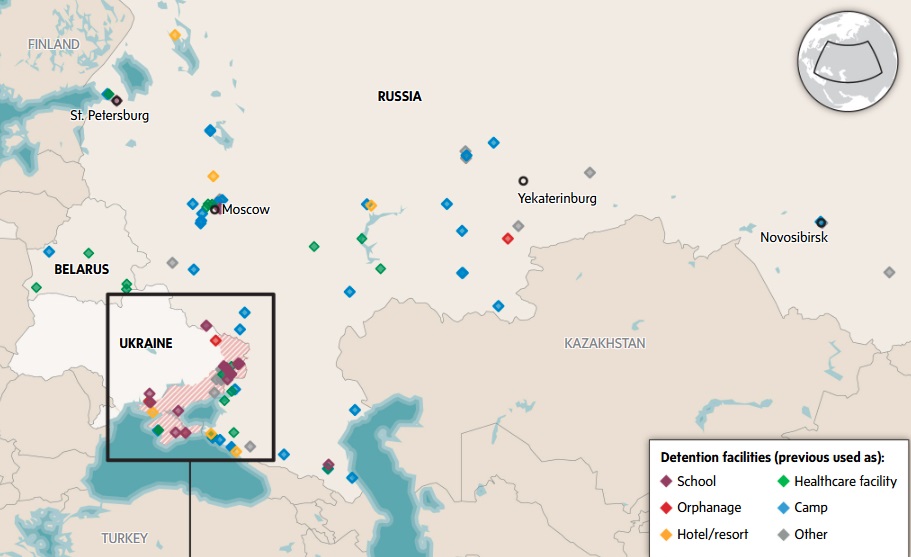
In the midst of Trump ceasefire pronouncements and reports on the mostly non-moving front of the war against Ukraine, came more evidence Russia is an existential crisis for Ukraine. Putin aims to wipe Ukrainians off the map of history. Canada’s Globe and Mail newspaper provides a stark reminder of this truth with its reporting on what Russia is doing with the Ukrainian children it has kidnapped. The newspaper received access to data from Hala Systems, a technology company contracted by the Canadian government to investigate Russia’s treatment of captured Ukrainians. These children are being put into camps, indoctrinated, and in many cases given military training. The Globe and Mail reports, “’We have seen some children as young as eight that are being sent into very structured military patriotic programs,’ said Ashley Jordana, Hala’s director of law, policy and human rights.” Of the 100 plus detention camps, “Hala has identified six of the facilities in the network as bases for Russia’s ‘Yunarmiya,’ or Youth Army.” Russia has committed a multitude of war crimes–kidnapping children, indoctrinating them and training them to serve in Russia’s military is yet another one, and a very distressing one. It is a fool’s hope that Putin will agree to a ceasefire that will last. His goal is to erase Ukraine. And so Ukraine acts accordingly. Europe and the U.S. should too.
Globe and Mail graphic
Cementing Reputations
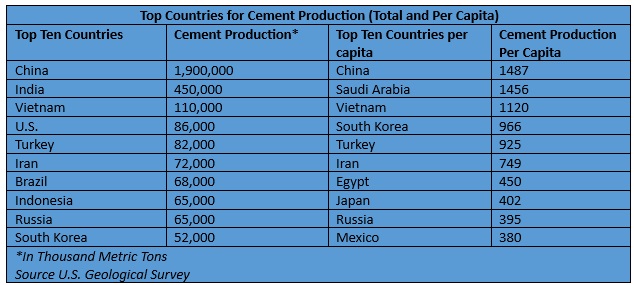
Who is building? Who is building too much? Who needs to build more? We try to answer these questions by looking at which countries are producing cement, the, er, foundation of building stuff. It turns out that the U.S. Geological Survey tracks cement by production. As you can see below, and no surprise, China is number one, and it’s not even close. India is second but China is producing four times the amount India is. Of course, it’s likely that China is producing more than is economically productive—yet another example of China’s overcapacity issues. This is how China tries to maintain annual GDP growth of 5 percent. It’s interesting that Vietnam is third. We have lamented in this space Vietnam’s inability to build infrastructure. This data seems to point to its attempt to address that problem. But note that Vietnam is also one of the top exporters of cement (as are Turkey and Egypt), so much of what it is producing is not for building much needed infrastructure in the country. The new head of Vietnam, Tho Lam, is trying to cut Vietnam’s thicket of bureaucracy and perhaps that will make it easier to build more infrastructure. At any rate, don’t just follow the money, follow the cement, to get an idea of what is happening in a country.
Saudi Arabia is in the middle of a huge construction spree, which is why it is so high on the list. I’m not sure the reason for Iran’s being so high on the list. Note that Europe is nowhere to be found.
China Corner: Deflation!
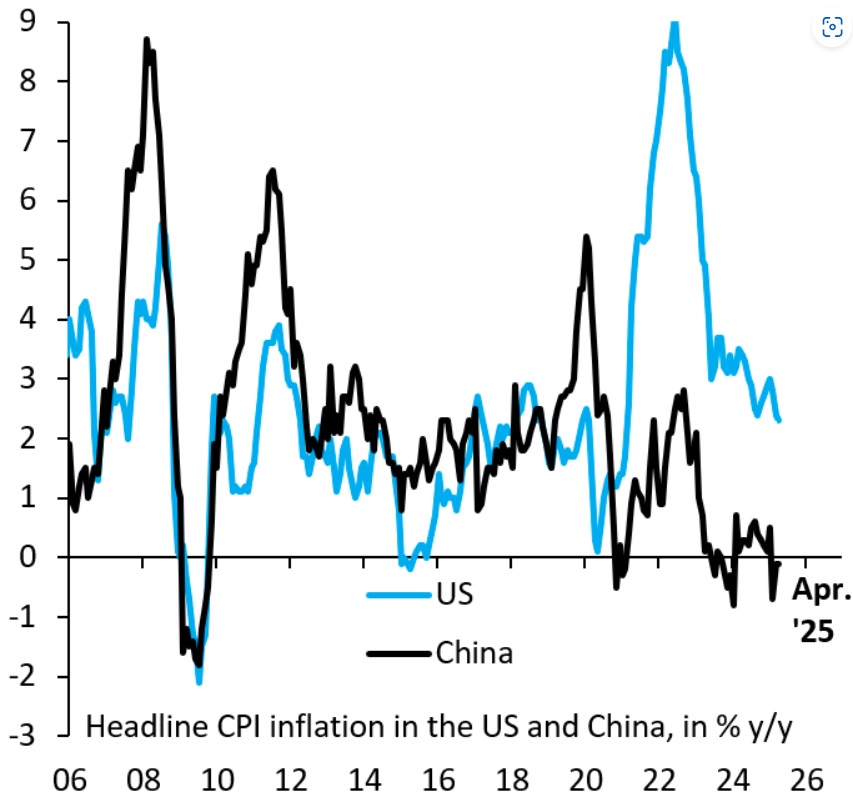
China’s economy is neither falling apart, as some analysts argue, nor the greatest economy in history, as others assert. It is a large, complicated economy with many opportunities and assets and lots of challenges. One of the latter is the possibility of deflation, Robin Brooks in his excellent Substack reminds us of the latest numbers. As you can see in his chart below, the Chinese economy has been dallying with deflation for over a year, a bar patron at 2:00 a.m., ill-advisedly considering whether to go home with the fatale standing in the corner. Brooks notes that tariffs could be further deflationary for China, “China’s headline CPI inflation was -0.1 percent year-over-year in April 2025. The deflationary impulse from US tariffs is therefore pushing on an open door.” Of course, it’s not clear what will become of the Trump administration’s tariffs on Chinese goods. Those imposed under IEEPA were recently ruled illegal, but another court stayed that ruling, at least for a few weeks. But Trump is likely to find other U.S. trade laws that will allow him to place tariffs on Chinese goods. China has lots of leverage in this trade war, including controlling the export of so-called rare earth minerals (we’ll likely soon see shortages of products that use these minerals). But deflation is a dangerous thing for an economy, hard to shake once you leave the bar with it. We once argued the economy is a bakery not a pie. And this is true. But under current circumstances it looks more like a biker bar.