We were alerted on social media that it is nearly the 20th anniversary of James Frey imploding on the Oprah Winfrey Show. You’re probably asking who the hell is James Frey and why should I care? Our youngest readers might be asking who the hell is Oprah Winfrey, which is a good lesson for not caring about fame which is indeed fleeting. We note this anniversary because Frey almost led to our being on Oprah, or at least our letter being read on Oprah. To refresh all our memories, Frey’s memoir, A Million Little Pieces, was selected by Oprah for her Book Club in 2005. The book was marketed as a true story of Frey’s addiction and recovery, but The Smoking Gun revealed that Frey had fabricated key events.
Back in the day, the International Need to Know spouse was a regular viewer of the Oprah show. We wandered into the family room one day to find Oprah defending James Frey after the revelations that Frey had lied throughout in his book. Oprah said, “The underlying message of redemption in James Frey’s memoir still resonates with me, and I know it resonates with millions of other people who have read the book.” She said, and this annoyed us and set us off on a rant to our long-suffering spouse, that Frey was telling “his truth.” Uh, okay, Oprah, but some of us value distinguishing between fact and fiction, lies and truth. In fact, distinguishing between the two actually matters and has real world consequences. The INTN spouse said we should write Oprah a letter, which we did, via the Oprah website. A few days later, we received a voicemail from one of Oprah’s producers asking us to call back regarding the letter we sent to Oprah. Which we did, and after a brief exchange of pleasantries, the producer asked if she could put us on hold. While we were on hold, we suddenly panicked that maybe Oprah was coming on the line. What the hell were we going to say to the all-powerful Oprah if she suddenly confronted us about our letter? But the producer came back on and we conversed about Frey and Oprah’s reaction to his lies.
The producer then asked if they could use our letter on a forthcoming episode. We said sure. And so we found ourselves in front of the television watching the episode about the Frey controversy, which featured James Frey himself. However, the confrontation between Frey and Oprah was so dramatic that the entire episode was devoted to the interview, and our letter, alas, did not make it on-air. We more or less totally forgot about James Frey but having been alerted to the anniversary, read briefly about him this week. He appears to continue to be a putz, who doesn’t understand whatsoever what he did wrong. Poor abandoned, disregarded truth. She is especially bedraggled nowadays. And so we turn to more edifying matters such as the Pope and the Sun, India making phones, and countries’ reliance on China. It’s this week’s International Need to Know, neither the Dr. Phil of international information, nor the Doctor Oz of global data.
Without further ado, here’s what you need to know.
The Pope and the Sun
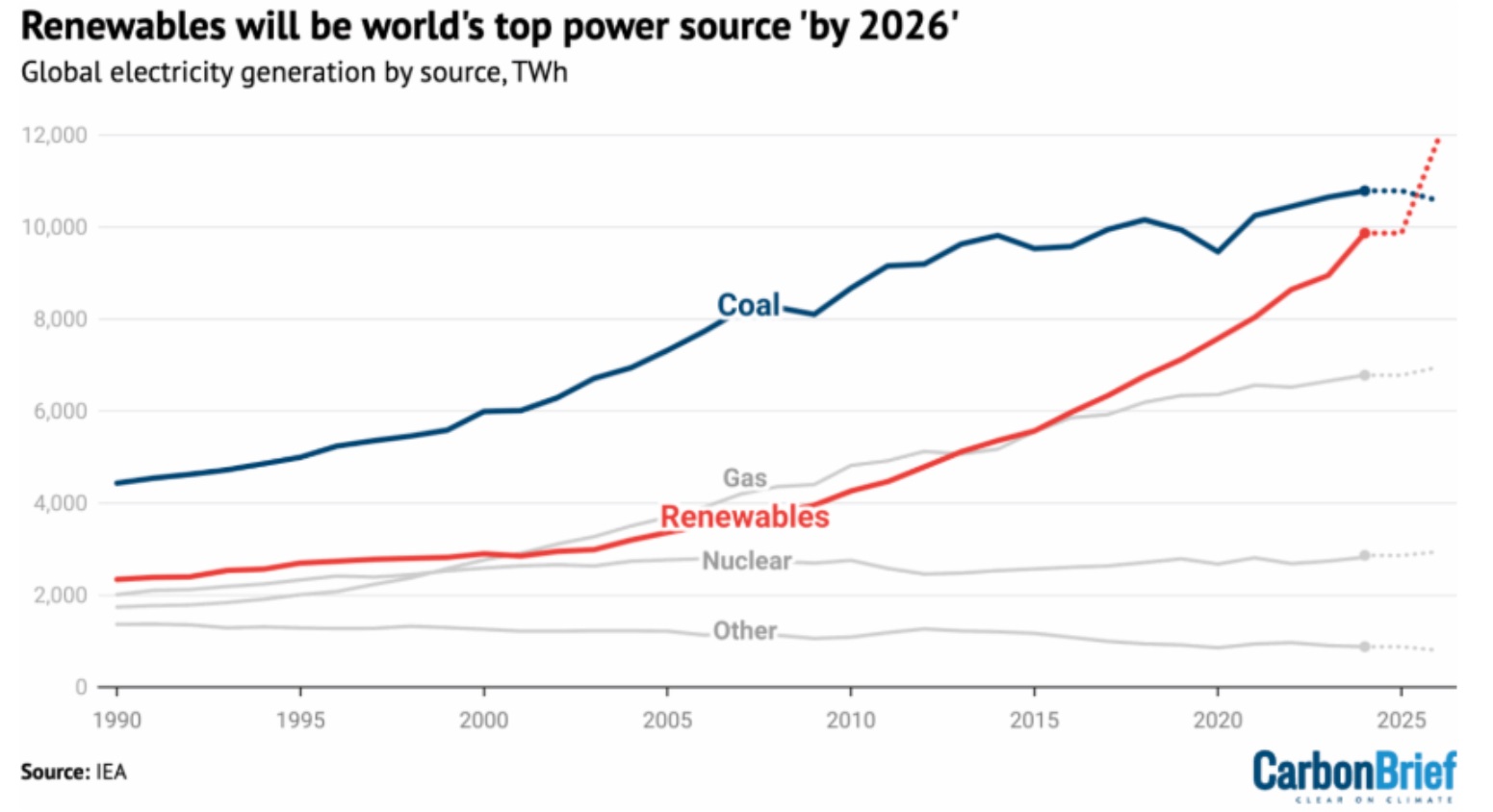
American Catholics take note: the Vatican is going solar. It has negotiated a deal with Italy to develop land just north of Rome into a solar farm that will generate enough electricity to make the Vatican the first country in the world that will be carbon neutral. As part of the deal, the Vatican won’t pay Italian taxes on the importation of the solar panels (presumably sourced from China). As we continue to remind you, the affordability of solar and the improvement of battery storage is electrifying our world. An interesting sidenote on this project is the solar farm is being developed on land that the Vatican has for years been using for radio towers. Apparently, this has been controversial with nearby residents complaining the radio waves are making them sick, including, they allege, an causing increase in childhood leukemia. The Vatican says this is not true. It’s fun to see superstitious NIMBYs citing unscientific assertions to the organization that took down Galileo. The Catholic Church is now more scientific than the United States government. The Lord works in mysterious ways.
India Calling
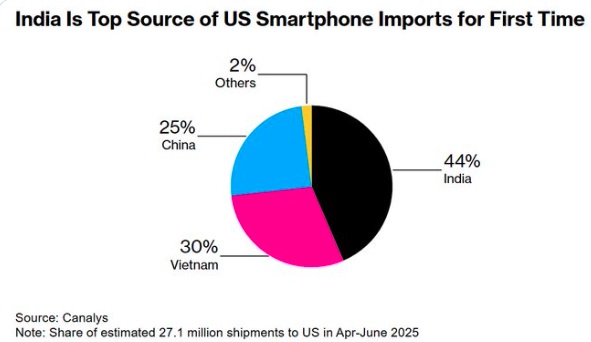
That phone you’re reading this on? And that you use for all sorts of less useful and fun endeavors? Where did it come from? Bloomberg recently reported that most phones sold in the U.S. are now made in India, not China. We’ve noted over the last few years that Apple (and other companies) were increasingly diversifying out of China. This started during China’s Zero-Covid policy when the country shut down entire cities, including factories. That was a bridge too far for businesses who need more reliability. However, as Patrick McGee, author of the book Apple in China (which we may write more about later), notes, many of the components of the iPhones made in India come from China. Final assembly is what is happening in India. As we’ve written about with Vietnam, that is the natural progression for developing countries on their manufacturing journey. Over time, India (and other countries) will likely make more and more of these components and the country will rise up the value chain. Or we better hope so. It will be a tremendous failure for the world if thirty years from now India is not a developed country, both for hundreds of millions of human beings living in India who won’t rise out of poverty but also for a world that needs its largest democracy to be successful. We need a democratic India 21st Century not an authoritarian China one (or China could, you know, liberalize politically).
China Corner: Sleeping with the Enemy
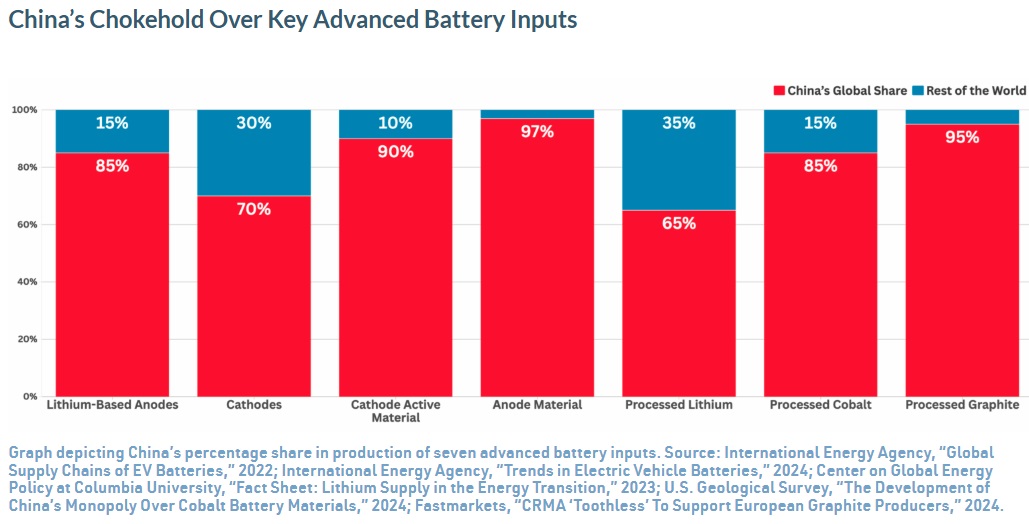
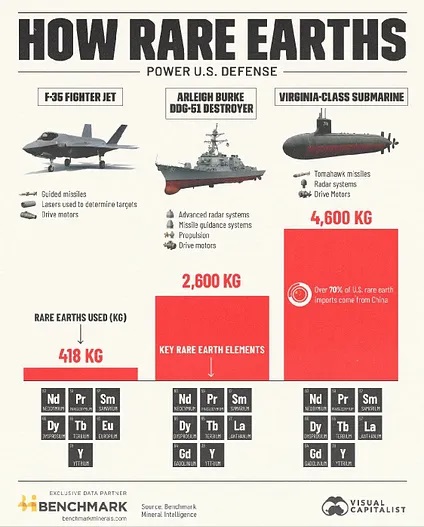
The Wall Street Journal recently reported on just how reliant the United States and the rest of the world are on China for a strategic mineral, including, gulp, U.S. defense manufacturers. The Journal reports that, “Beijing’s hold on rare earths and specialty metals has disrupted production for systems ranging from drone motors to missile guidance components.” This reliance has been true for many years, long before Trump Deux began. It’s a failure of multiple U.S. presidential administrations—Democratic and Republican, including the first Trump administration—that nothing substantial was done to prevent and change this dangerous equation. We think too many analysts oversell the notion of China’s long-term strategic thinking (it makes as many or more mistakes as any leadership), but it has been smart in this key area. If three years from now, the U.S.—and other countries—are still reliant on China for critical minerals, and other strategic supply chain chokepoints, policy will have been an abject failure. And, almost assuredly, 23 million people in Taiwan will lose their freedom.