Longtime, astute International Need to Know readers will have noticed we are a Seattle Mariners fan. Indeed, as a kid we attended the first Mariners game ever in 1977 in the old Kingdome, seated about as far up as you can go in the 300 level, perched below the tiles that in less than 20 years would deteriorate and fall, a grand metaphor for the franchise itself. In Ken Griffey Jr.’s rookie year we were in the centerfield bleachers at Yankee Stadium watching the fans give him the business which is when we realized he was going to be a huge star. We were there for the one-game playoff in 1995, and the magical postseason run that ensued, including Edgar’s double. We watched them win 116 games in 2001 and still believe if it hadn’t been for September 11th the Mariners would have gone to the World Series that year. But more importantly, we were there for the seasons, which was most of them, when the Mariners lost game after game, made bad personnel moves and found unique ways to be bad. Of course, the Mariners are famous for being the only team in Major League Baseball to never play in the World Series. For at least the past decade we’ve written our Annual Seattle Mariners Temper TantrumTM on Facebook.
So these are heady days for Mariners fans when Vegas gives the Mariners the best odds of winning the World Series. It only disheartens us a little bit that it appears things can only go well for the Mariners when things are going so badly in the world, as if the universe must remain in balance somehow. Likely the Mariners’ baseball stadium is built on top of an ancient space aliens’ graveyard. It would explain a lot. And even though the Mariners could lose in the first round, we aren’t taking this special moment of promise in Mariners history for granted. We only hope there is no Armageddon before the Mariners finally play in the World Series. As we wait for Game 1, we see solar hit a double, Albania turn to automated umpires and China slide into Africa. It’s this week’s International Need to Know, the Bart Giamatti of international information, the Bill James of global data.
Without further ado, here’s what you need to know.
Solar Doubles
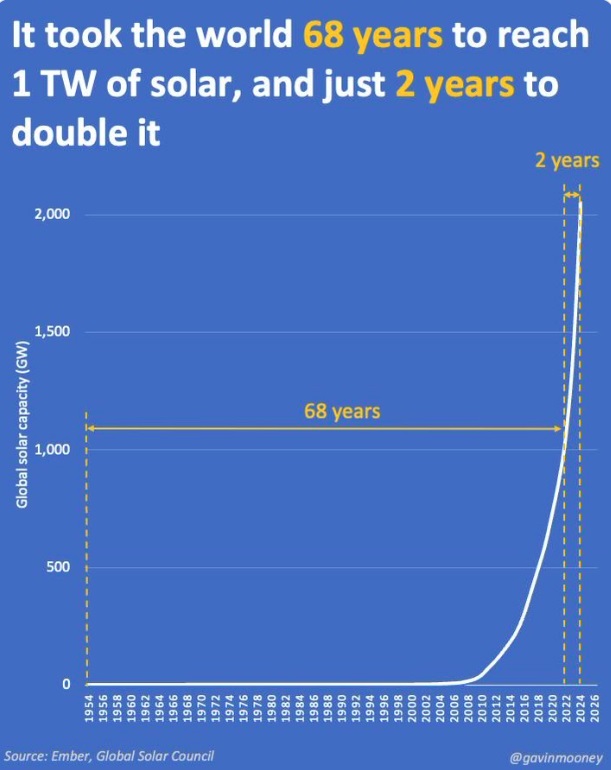
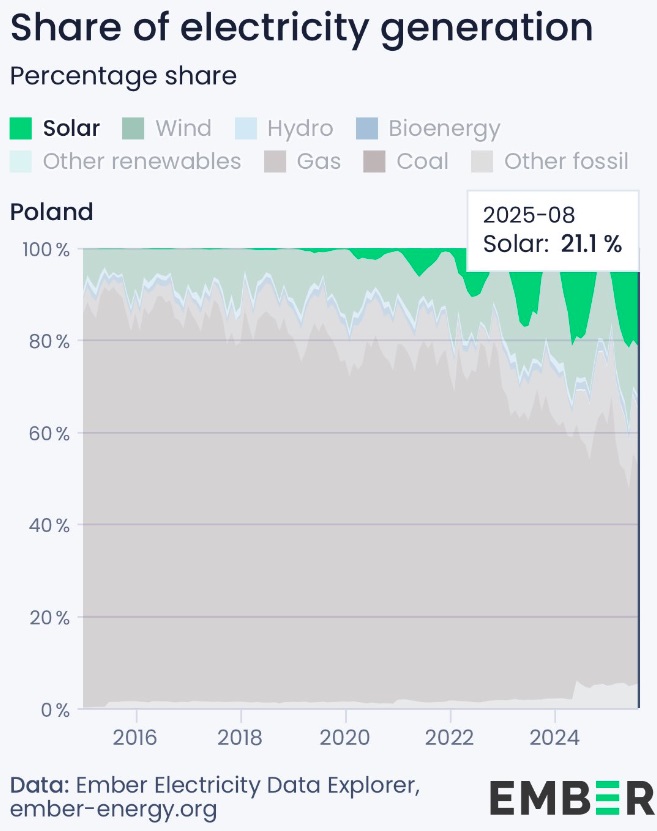
Thanks to the eagle eyes of our friend, Mike W, we start out the week with a quick hit on solar. As you can see in the chart below from Ember, “it took the world 68 years to reach 1 TW of solar, and just 2 years to double it.” This chart tells the story of capacity but it’s the same tale for generation. In terms of climate change, we’re not overly worried about the current U.S. administration’s attacks on solar and wind. The economics of solar will overwhelm the weird aversion of the Trump administration to energy abundance. Indeed, solar probably no longer needs subsidies. IF the U.S. federal government doesn’t prevent solar, it will continue to be installed, as it is everywhere in the world (see the second chart below for one example) at increasing rates. It’s not dealing with climate change that is at risk, it’s America’s standing vis a vis other countries, including China, that are in a whole heap of trouble due to the current administration’s energy policies (and many of its other policies). We reported recently on Africa’s adopting solar rapidly. Those countries that scale quickly will reap the first benefits of abundant, cheap energy, which will provide multiple advantages across multiple domains. Those that are late to the game? They will learn a painful lesson.
Albanian AI Minister
We’re tardy to cover this story but then again we haven’t seen much coverage of it and we think, well, you need to know about it. A few weeks ago, Albania’s Prime Minister Edi Rama appointed an artificial intelligence system as a minister, integrating it into the governmental system. The AI minister’s name is “Diella” which means “sun” in Albanian, for those of you unfamiliar with the language. We, of course, are fluent in Albanian…or would be if we had the new Apple AirPods which offer simultaneous translation. So, what is Diella supposed to do in her ministerial role? Well, her responsibilities include overseeing public contracts, with the idea she can prevent corruption from happening. She’ll also help Albanians access governmental services as a virtual assistant, which given our experience with virtual assistants makes us worry for Albanians. But we withhold judgment. We don’t know the future of AI progress and or lack thereof. We suspect even if there are no more advances in AI technology beyond what we have today—and that is unlikely—even current levels of AI technology will transform many parts of our lives. As always, some of it will be for the better and some will leave us pining for a human voice while stuck on hold with Diella.
China Corner: China’s Affect on Africa
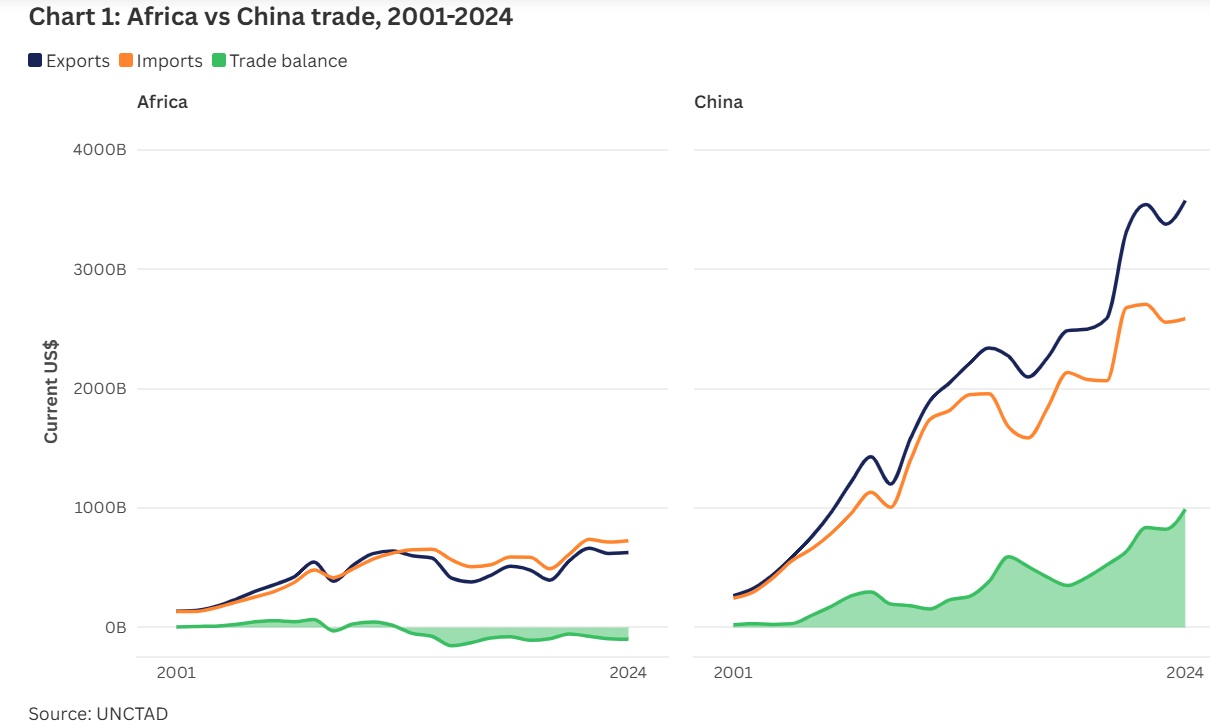
This is a complicated question. In our book, Challenging China, we referenced the book The Next Factory of the World by Irene Yuan Sun, which described how Chinese companies, not the government, were setting up factories in various African countries. This is a good thing because it helps those African countries develop as Taiwan, South Korea and Vietnam did previously. But a new paper by two MIT professors and one Boston College professor, argues that China’s policies and exports have in certain ways retarded growth in certain African countries. Or, at the least, it changed how these African countries developed. Their paper asserts, “…the emergence of China has held back capability growth for a number of African countries who are pushed away from their most-complex sectors, which China exports, and into their least-complex sectors, which China imports.” China’s current overcapacity issue—where it is overproducing products and components beyond domestic needs and exporting the surplus—probably exacerbates the challenges for Africa. China has the overcapacity issue because it is trying to use exports to spur economic growth in the face of their real estate and debt issues, and because it wants to control strategic industries. How this all ends up is difficult to know, but it will affect African development in one way or another.