Years ago, a friend shared a video of his young daughter playing the drums. She was as cute and delightful as a human can be, including after a complicated riff looking up at the camera as if to say, “pretty good, huh?” Drums are the oldest musical instrument. They have been unearthed in China dating back nearly 8000 years ago. Even some animals have been observed drumming, mostly primates but also kangaroo rats, which makes them by far the best rodent. We drum ourselves, if often to the beat of a different drummer. The character, Jimmy, in our old novel, Munsrat Lives, continually drummed. Drumming is intrinsic to human nature and good for the soul. So, we could not have been more delighted if they were two young children of a dear friend to see Japanese Prime Minister Sanae Takaichi and South Korean President Lee Jae Myung drumming together as part of a summit they held earlier this week.
Prime Minister Takaichi, of course, was a drummer in a heavy metal band many years ago. Meanwhile, President Lee said during APEC meetings last year it was his dream to play the drums. So, during Lee’s visit this week to Japan for the summit, Takaichi was ready with two drums sets, and for reasons not entirely clear, matching blue jackets. The two leaders played a song from the movie, K-Pop Demon Hunters, the best titled film of the 21st century, and a song by BTS. Lee wrote of the performance, “Even if our timing was slightly different, our intention to find the same rhythm was shared. In that same spirit, we will continue to build a future-oriented Korea–Japan relationship together, with one heart.”
And so, no matter what the news brought this week—and it was often gushing hazardous waste of unfortunate events, the world may yet be saved by two drummers. We urge all world leaders to buy a drum set. And while they go shopping, we hit the cymbal on how Iran could be great, shake the tambourine of China and India’s falling coal usage, and bang the bass drum on DeepSeek’s popularity. It’s this week’s International Need to Know, writing to the rhythm of international information, banging the gong of global data.
Without further ado, here’s what you need to know.
Make Iran Great
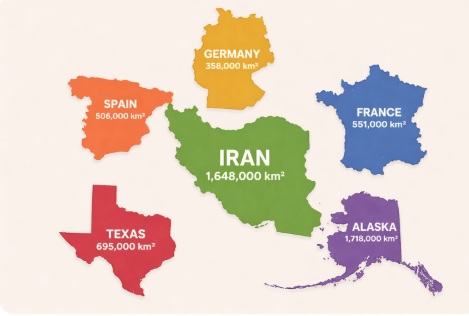
As we write, the fate of the Iranian people is up in the air. Iran’s authoritarian government has been attacking its own citizens with reports of between 12,000 and 20,000 Iranians murdered by their own government. The world could badly use a win for freedom right now. But that goddamn arc can take an awful long time to bend towards justice, if at all. Should Iran ever become free and democratic, it can achieve truly great things for itself and the world. Many people do not realize how large Iran is. By land area, it is the 18th-largest country in the world, much larger than Spain, Germany or France. It is larger than Texas, it is almost as large as Alaska (people forget how large that state is). Just as important is that its geography is diverse. The stereotype of countries in the Middle East is they are all deserts. That is not true of Iran. Iran also has a large population—it is the 17th most populous country in the world with nearly 86 million people. The population is well-educated and if not for an authoritarian government and sanctions, Iran could take off economically and build a civil society that other countries would envy. But none of that can happen until the current regime is toppled and democracy somehow established. Two tough tasks to accomplish. If there is a way to help Iranians, we should do it.
Yes, AI failed me in this graphic. Can’t win ’em all.
Coal Losing in India and China
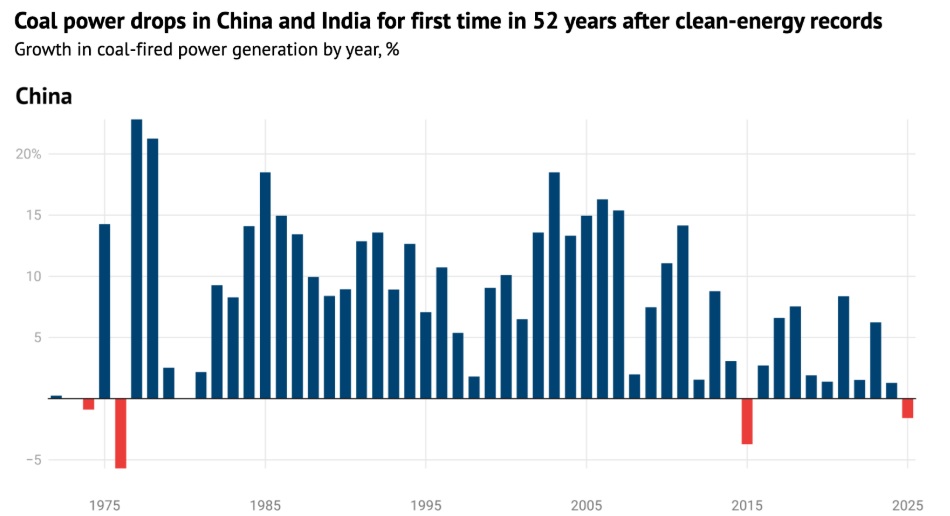
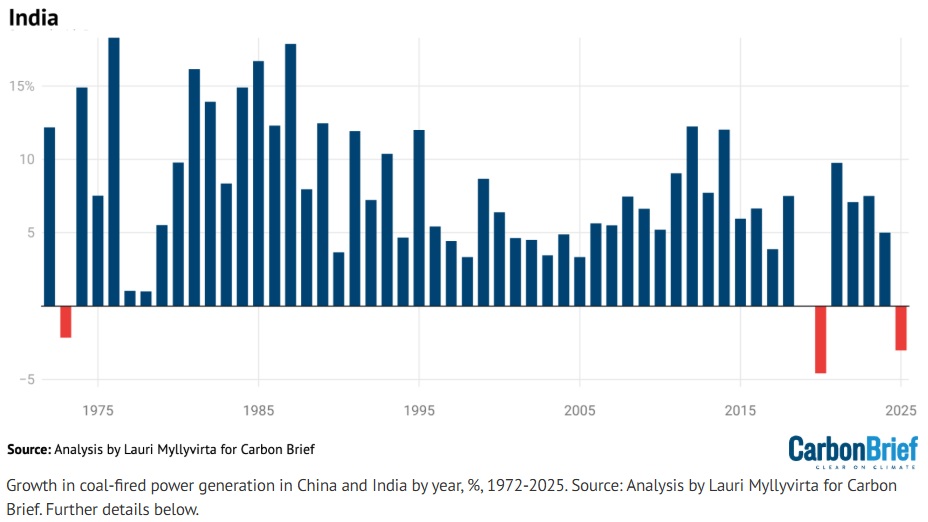
To paraphrase the great Ferris Bueller, life moves pretty fast, if you don’t stop and look around at energy generation once in a while, you could miss it. For the first time in 52 years, coal power generation fell in both China and India last year, according to Carbon Brief. This is more evidence of the clean energy revolution. Both countries added record amounts of clean energy in 2025 and will add a lot more this year. The Carbon Brief report states, “generation from coal in India fell by 3.0% year-on-year (57 terawatt hours, TWh) and in China by 1.6% (58TWh).” The last time this happened was in 1973, but that year’s drop was not due to clean energy but because of stagnant economies and the energy crisis. Today, India and China are using more energy which is good for their economies, but reducing usage of coal, which is good for reducing air pollution and addressing climate change. Indeed, Carbon Brief writes, “China achieved this feat even as electricity demand growth remained rapid at 5 percent year-on-year.” India’s electricity demand was stagnant due to mild weather, but the big reason for the fall in India’s use of coal was a record installation of clean energy generation. We’ll be seeing more news like this in the coming months and years as the revolution continues. Oh, and Cameron’s dad’s car will be electric.
China Corner: The Rise of DeepSeek
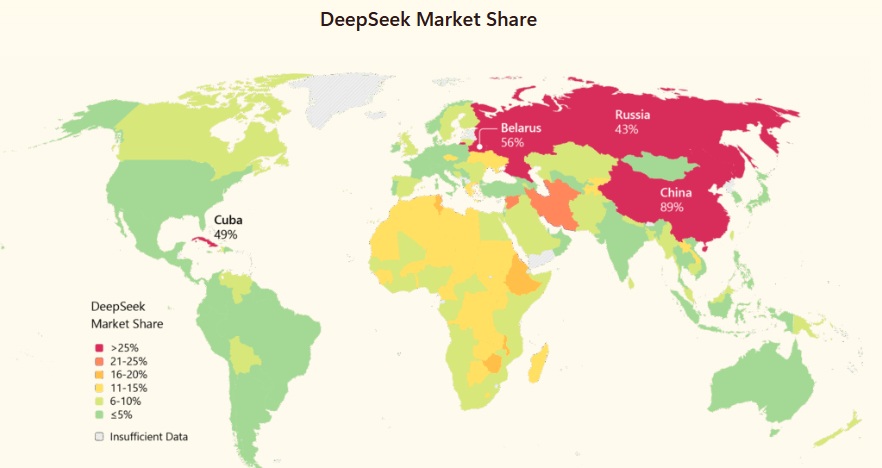
Last year, DeepSeek, the Chinese AI company, shocked the world by releasing an LLM AI model that while perhaps not quite as good as the established front runners, was still pretty darn good. It is difficult to say if it will continue to keep pace in the AI race. There are now other Chinese companies running hard along with the American leaders. Three factors will likely have a say in who wins:* a) export controls; b) developing and fostering talent; and c) building the energy generation necessary for high-level AI. But let’s put all that aside for a moment and ask a different question: how much is DeepSeek’s model being used in the world? Microsoft, which has a stake in this AI game, recently released a report that shows usage of DeepSeek spreading rapidly. As you can see in Microsoft’s graphic below, unsurprisingly DeepSeek’s greatest success is in China, Russia and Belarus. But it’s also gaining in markets that, as Microsoft says, “are underserved by Western AI platforms.” This includes much of Africa. “In Africa in particular, DeepSeek usage is estimated to be 2 to 4 times higher than in other regions.” The reason for success in Africa and other such markets? Cost. “DeepSeek’s free service eliminated the cost barriers (requiring credit cards or paid upgrades) associated with Western models. In addition, Chinese technology companies, including DeepSeek and infrastructure partners like Huawei, actively promoted and deployed the platform in African markets through partnerships, outreach, and integration with telecom services.” And, to be fair, Chinese government subsidies. The Great Race is on.
*We’re not sure what the definition of “winning” should be. Remember one of the INTN founding philosophies is that 75 percent of problems in this little world of ours are due to people having the wrong definition of “winning.”