Our colleague, who considered herself the arbiter of cool, picked up the Neil Diamond cassette tape off our desk, gave us what she considered a withering look (difficult for her to do because despite the attitude and appearance she wanted to portray to the world, she was in fact a fragile, soft-hearted soul) and attacked us for liking Neil Diamond, the epitome, at least at that time, of the uncool. As you might guess from the fact of the cassette tape, this took place decades ago, probably 1987 or 1988 when we toiled for a Congressman in the hallowed halls of the Longworth Building in Washington D.C. Since we were barely in our 20s, rather than ignoring our colleague as we might do now when we are as mature and stoic as a buddhist monk who has renounced worldly concerns atop a crag of a snowy mountain peak, we defended Neil. Not that he needs any defense—his worthiness and cool factor are self-evident. Nonetheless, we pointed out that we’d seen our colleague dance to the UB40 cover of Red Red Wine, a song written by Neil. We asserted there is nothing cooler than Cherry Cherry.
We offered a multitude of evidence that our colleague was wrong and we like to think we convinced her, that she quietly hummed that night when she got home Solitary Man. Of course, in time we would be proven right, vindicated by Quentin Tarantino, Urge Overkill and others with far more cool cred than us, as well as by the emergence of Neil Diamond tribute bands. Which leads us to our point (Editor: you have a point? INTN: an exquisite one). We recently came across the trailer for the upcoming movie, Song Sung Blue about a Neil Diamond tribute band and it looks corny as heck and likely Hollywoodizes the true story that it’s based on–and we’re here to tell you we’re all in and will be there opening night. Because there is nothing cooler in this world than Neil Diamond. I know it, our colleague surely now knows it and you know it. And I know Pakistan is in a lot of trouble, America can’t build anything affordably, and China is putting Germany over a critical minerals barrel. It’s this week’s International Need to Know, Cracklin Rosie over international information, a Brother Love’s Travelin Salvation Show of global data.
Without further ado, here’s what you need to know.
Pakistan Problems
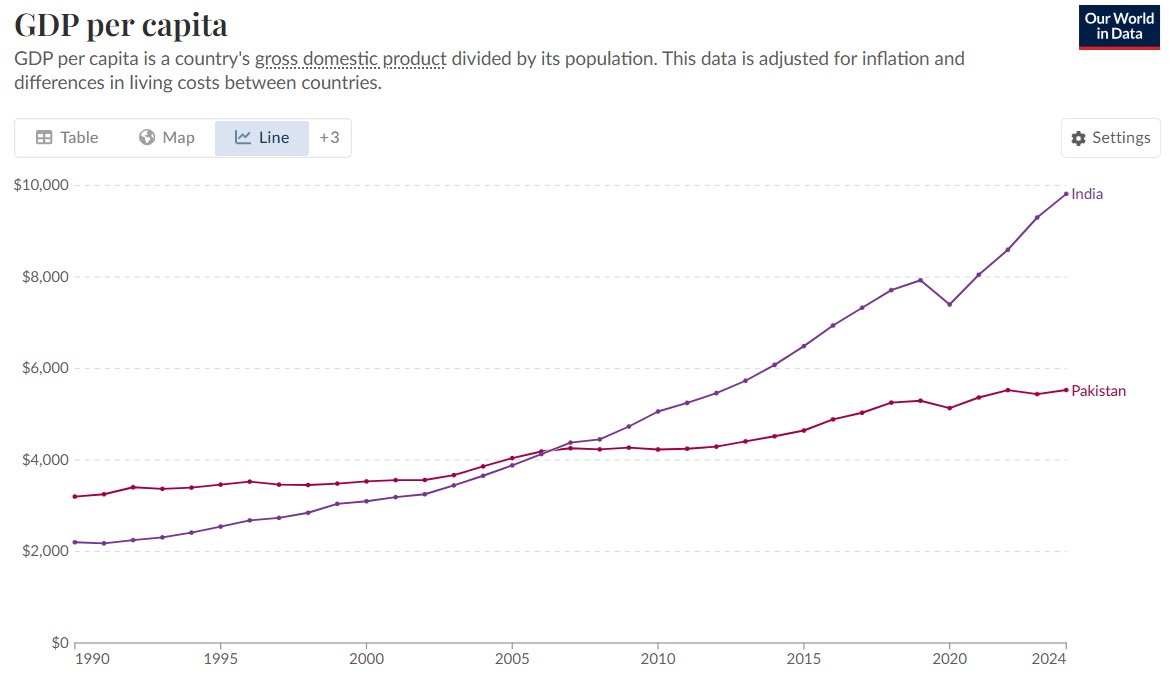
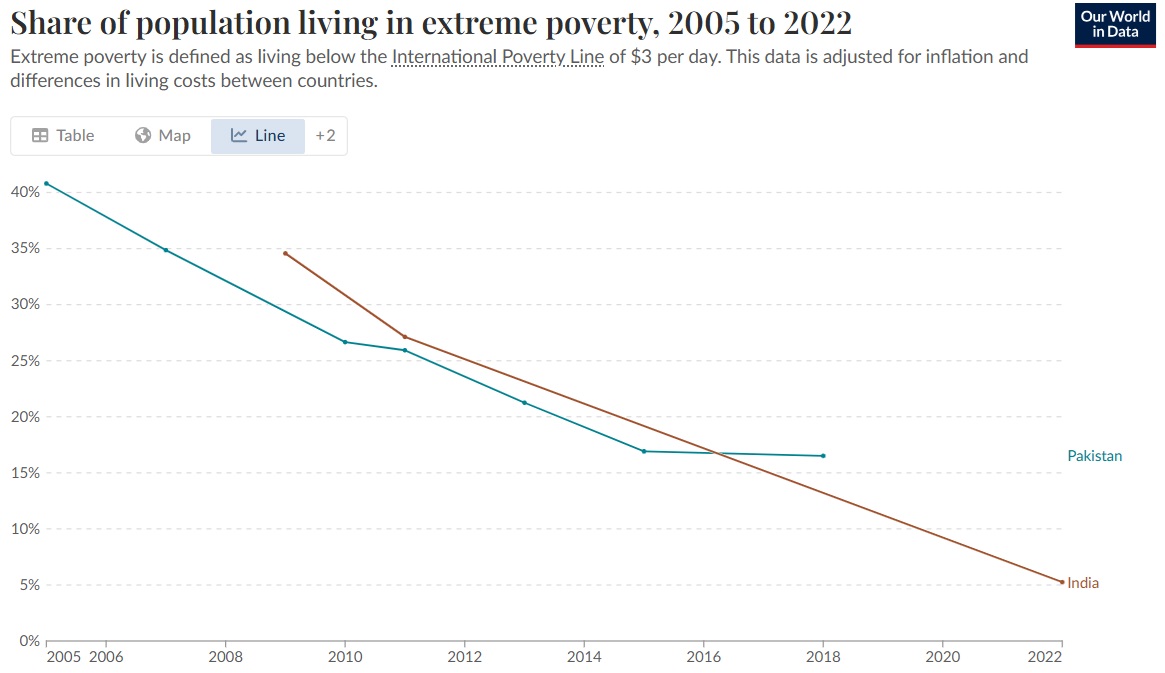
Last week, we pointed to yet another study showing democracies outperform autocracies. Let’s look at a specific example, Pakistan. We saw a tweet earlier this week noting how Pakistan lags far behind India nowadays. As you can see in the chart below, comparing GDP per capita of India and Pakistan, it’s true. The divergence starts in 2007. That was the year Keith Richards denied snorting his father’s ashes but it was also when Pakistani President Pervez Musharraf declared a state of emergency, suspended parts of the constitution and removed judges, triggering wide protests and opposition. Later that year former prime minister and opposition leader Benazir Bhutto was assassinated. Since then, Pakistan has had civilian democratically elected governments but the tension between the military and civilian governments continued. Issues around governance, rule of law, transparent elections, stable policymaking, and corruption have repeatedly hampered economic performance. India has not been perfect during that time period, of course. But it has been a much more stable democracy and under Modi has introduced a variety of economic reforms. Years ago, we considered Pakistan the most dangerous country in the world. It probably is no longer that, but it’s not great that the fifth most populous country in the world is such a wreck politically and economically—and the former is related to the latter.
Shout It From the Rooftops
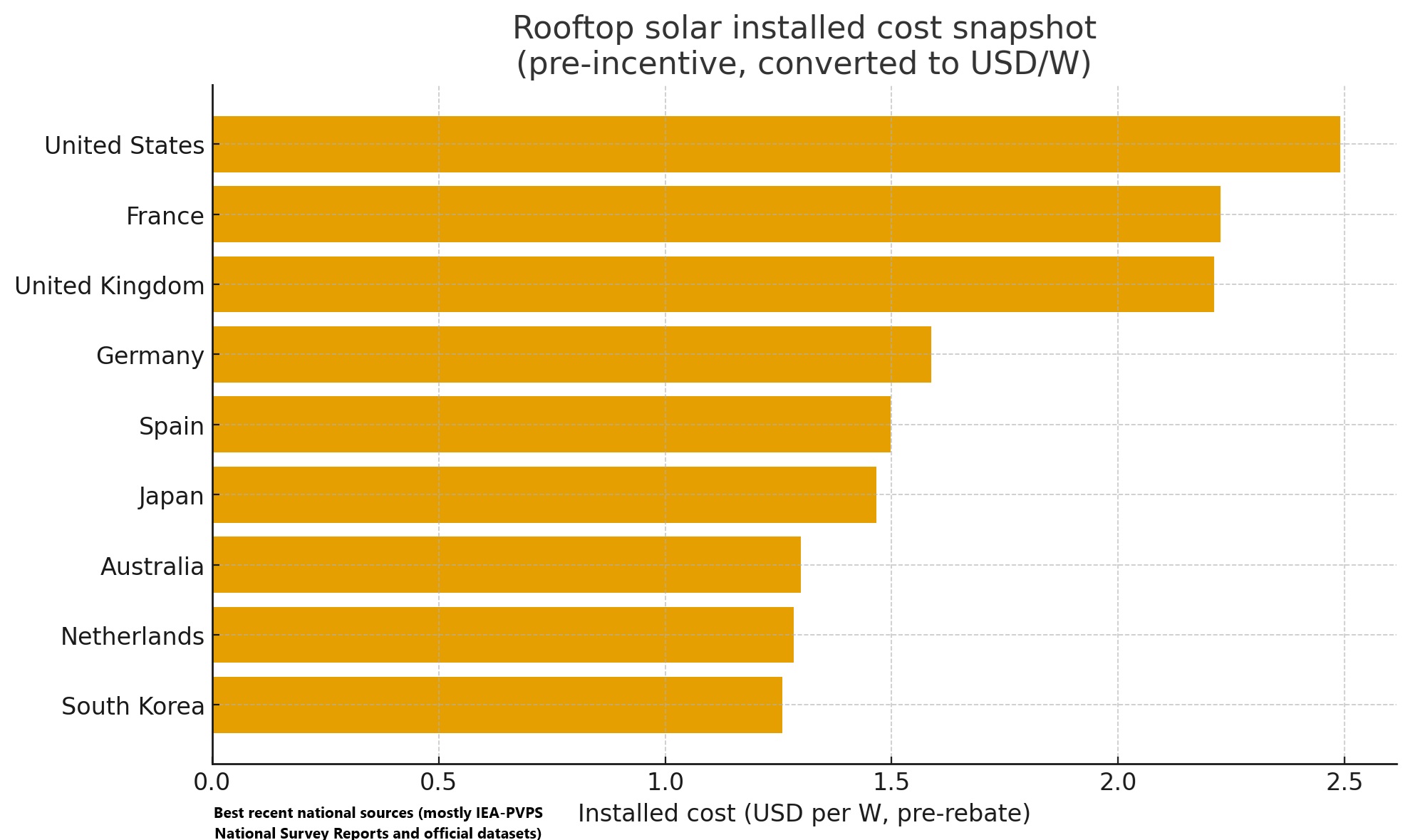
On our walks around our neighborhood, our drives around the city, we see more roofs dotted with solar panels. That’s in soggy Seattle, where the great dark is about to descend on the region for the winter. Presumably there are even more solar panels in sunnier climes but even there they could be more ubiquitous. But it’s more than the weather that holds back the installation of residential solar panels, it’s the expense and time. The climate change news source Heatmap reports, “Americans pay a median price of $28,000 for a 7-kilowatt system. The typical Australian, meanwhile, spends just $4,000, and the German — after filling out a mere two-page application — pays $10,000 per project.” This is all a part of the inability to build, well, just about anything in the United States efficiently or affordably. As we’ve noted in this space previously, it costs two to three times more to build public infrastructure in the United States than in Europe or Japan, with no commensurate benefits to the environment or labor. A dysfunctional regulatory regime is one of the four most important challenges confronting the United States, and it is not discussed, and more importantly, not addressed, nearly enough. Whether port infrastructure, building a house, an apartment building, a factory, or putting solar panels on the roof of your home, it is far more expensive and takes far longer to do than is necessary. Below is a table comparing costs for installing rooftop solar among a variety of countries. It is courtesy of ChatGPT-5 so there may be problems with it, although we did check its sources and they appear legit.
China Corner: Germany Over a Mineral Barrel
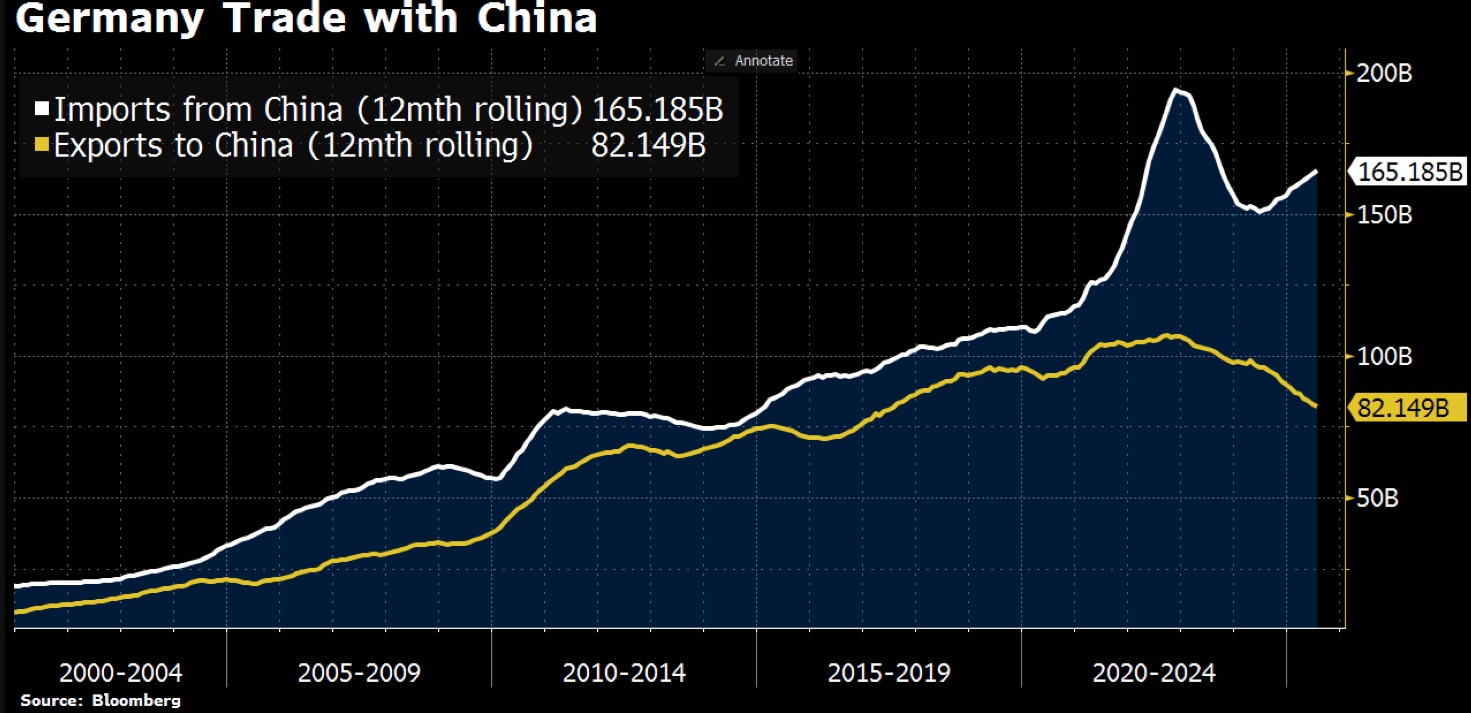
Trump and Xi met this week, a couple of aging geopolitical mafiosos. Trade deals are in the works and already it appears China will pull back its export controls on minerals (what are mislabeled as rare earth–they aren’t rare, and they aren’t dirt), at least for a year. China’s deal appears to be only with the U.S. and doesn’t affect other countries, meaning other countries will have more difficulty accessing these key minerals. Of course, China could at any time in the future again restrict export of these minerals to the United States, which are used for everything from military equipment to cars to phones to you name it. Lack of access will cause major disruptions to the economy. China is and will use their control of these minerals for leverage. With Germany, for example. Bloomberg reports that in order to get access to these minerals, China is requiring German companies to hand over industrial secrets such as blueprints and supply chain details. As we’ve noted before, China is the most powerful country in the world, and this leverage is one example of how. The big question is if other countries will diversify their sourcing and supply chains away from China and how long it will take to do so. How long will China stay at this peak of power? And what will it mean for the world? And why did we note that in 2007 Keith Richards denied snorting his father’s ashes? All difficult questions to answer.