We like to believe we are not easily defeated by our fellow humans. We don’t mean in a wrestling match or anything like that, but just in day-to-day interactions, negotiations, working to get people to join together on projects and initiatives. Or when confronted by a challenge, able to figure out ways to surmount or at least mitigate the challenge. We’re not saying we’re a genius or anything but we would claim more often than not we are able to make things work. But non-humans? There we are defeated, repeatedly, often in embarrassing ways. In recent years we’ve been stymied and flummoxed by among others rabbits, raccoons, crows and the evil, evil species known as ants. The animals, in their own fashion, trash-talk us like an NBA star. The latest example is our cat, Willow, the 19-year-old wonder of our household. The Queen, for whom we and the International Need to Know spouse gladly help to make as happy as we can. Being 19, Willow is not as fleet of foot as she once was. Indeed, even in her youth, she was remarkably uncoordinated, especially for a feline, who are known for their smooth, adept movements. But now Willow even has trouble getting down from her heated, protected lair on the couch or jumping up onto the loveseat to lie on our laps.
So we bought a set of cushioned stairs to help her get up and down more easily. But getting her to use the stairs? Ah, therein lies the challenge. We tried putting her favorite treats on each step as an enticement. We tried to demonstrate how to climb up the stairs. But she ignores them like a Trump administration official ignores the law. One time we picked her up and placed her on our lap while we sat on the loveseat. Beforehand, ever so clever, we strategically placed the steps next to the loveseat. Once she had enjoyed her lap time she could easily just walk down the steps to enjoy the rest of her day. But no, she stepped around the stairs and maneuvered to jump to the floor underneath the tray obstructing her path, as coordinated as a cat in the purr of its prime. And though it’s possible we imagine this last part, we swear she glanced back with a look and sound that said, “Nice try.” But we aren’t imagining solar’s strides in Africa, India’s economic progress and China’s new auto dominance. It’s this week’s International Need to Know, shedding international information, pawing at global data.
RIP to the great Steve Cropper
Without further ado, here’s what you need to know.
Solar is the Cellular Tech of Energy for Africa
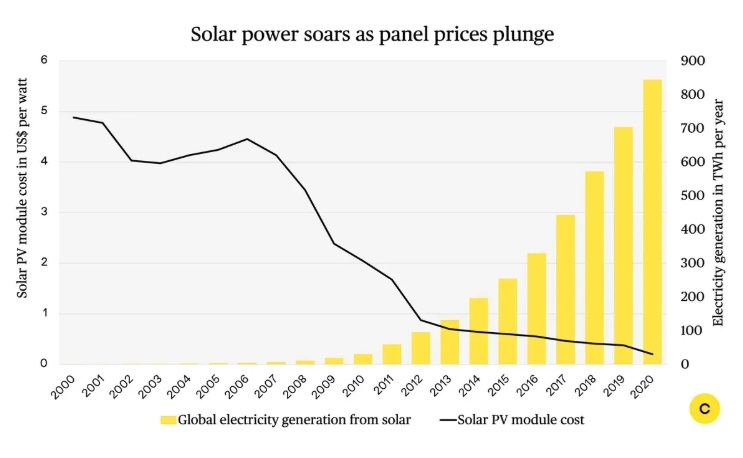
Many countries in Africa, for a variety of reasons, have fared badly in building out important infrastructure. This is not good, but occasionally, this has allowed these countries to leapfrog technologically. For example, a bunch of countries who never built adequate landline telecommunications infrastructure, essentially leapfrogged some developed countries when cellular technology became available. The same may now be happening with solar technology. An excellent article by Climate Drift details this phenomenon. It points out that, “Over 30 million solar products sold in 2024. 400,000 new solar installations every month across Africa. 50% market share captured by companies that didn’t exist 15 years ago.” Over 600 million people across the continent lack electricity. This is both because of challenges with governance but also because it’s difficult to reach rural communities. But with solar you don’t have to build centralized power generation and string transmission lines across long distances. With solar and storage (batteries) costs plunging, energy can be distributed much more easily. Affordable, accessible energy will transform Africa—everything from household electricity to irrigation to manufacturing capabilities.
India is the New (Better) China
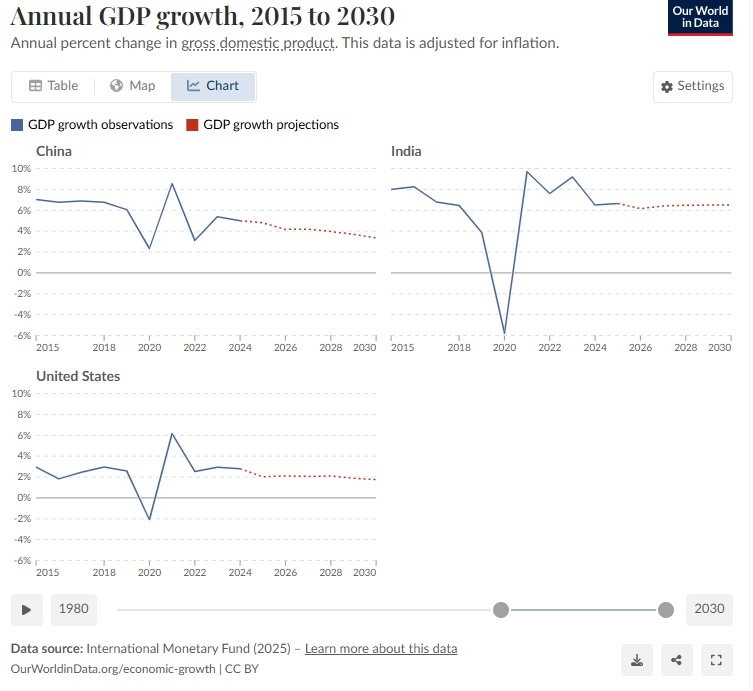
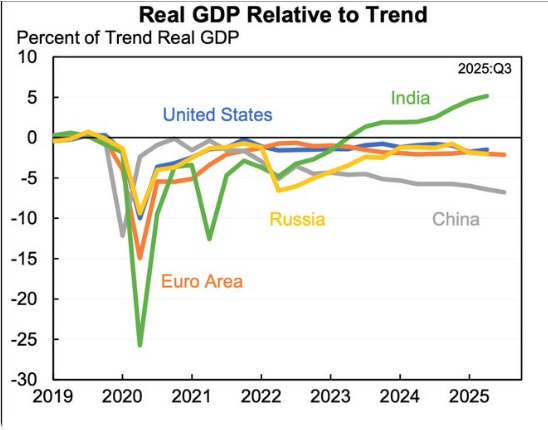
As longtime readers know, we are hopeful that India will continue to grow economically and maintain its democracy. That way it can be a model for the 21st century world. We hope for a democratic, prosperous century, not an authoritarian one and India can play a key part in making that future come true. Fortunately, India continues to make great progress economically. It is the fastest growing large country in the world. The government of India is working to make India a manufacturing power. Apple continues to build its manufacturing presence in India. According to the Business Standard, “Apple has now spread its India manufacturing footprint across 8 states via 40+ suppliers — from Gujarat and Kerala to Haryana, Telangana and UP. The supplier-ecosystem now feeds both domestic iPhone production and Apple’s global supply chain.” Meanwhile, India is attracting more foreign direct investment. Indian Tech and Infra reports that, “India has received $35.1 billion in foreign direct investments (FDI) in April-September, FY2025-26.” Even as Apple and other countries increase their presence in India, the Modi government announced investment reforms aimed to make it even more successful. Noah Smith notes that “At 8% growth, India will be a World Bank high-income country around 2040 — just 15 years from now.” We’re very worried about the geopolitical landscape over the next decade. We’re hopeful that the second half of the 21st century will be much kinder to democracy and economic growth and thus to people. Again, India can make that happen.
China Corner: China is the Detroit, Etc of Autos
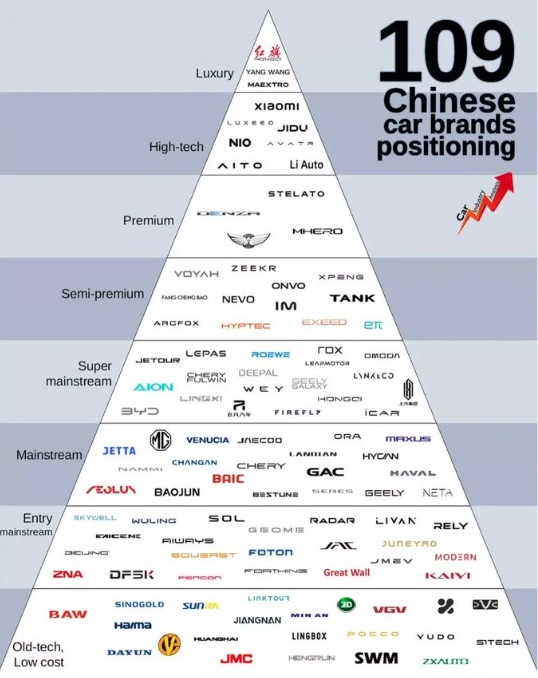
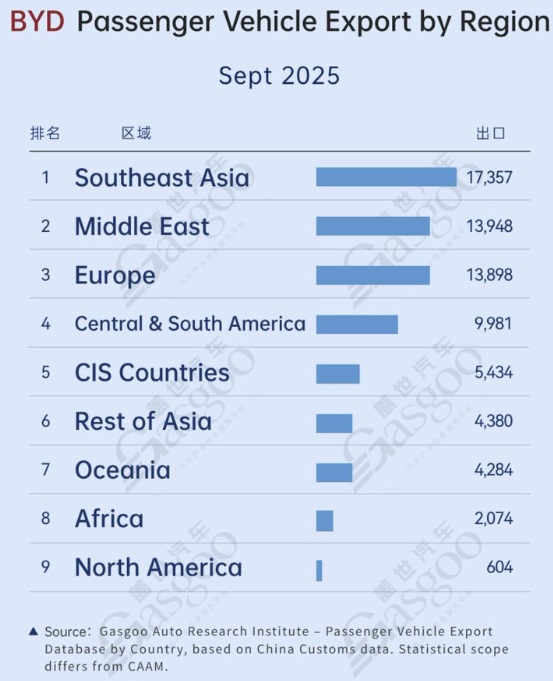
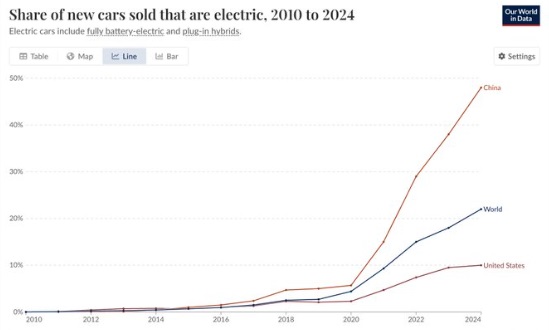
China is the Detroit, the Kyushu, the Stuttgart, the Tennessee of the modern auto industry. It produced 27 million cars last year and likely more this year. In fact, it’s producing more cars than Chinese can buy and even more cars than it’s able to export. Adam Tooze put together the graphic you can see below listing the 109 Chinese car brands. We bet you know about BYD, the leading auto manufacturer in China. Michael Dunne shows in the next graphic where BYD is exporting to—lots to Southeast Asia but also to the Middle East, Europe…well, basically all over the world except the ole US of A, where tariffs prevent their taking off. We won’t be surprised if Europe starts limiting the import of BYD and other Chinese cars. Another one of which is Xiaomi, which Dunne points out had the “quickest ramp to scale in 100 years of automotive history.” The company, which until recently was a consumer electronics company, now delivers nearly 50,000 cars per month. China’s success in the auto industry, much of which are now EVs, will reshape heavy industry, global supply chains and more.