Last Saturday, a group of youngsters stood in front of us in line at the ice cream truck, a part of our Ice Cream and Baseball Extravaganza. We were—wait, what is an Ice Cream and Baseball Extravaganza, you ask? It is an entire day spent in devotion to ice cream and baseball, with multiple stops at the best ice cream parlors around town and exhibits focused on baseball. The day is modeled on the Xmas Extravaganza we organize for the International Need to Know Spouse each year. What do you do on your early August Saturdays? At any rate, we assumed, judging from their youthful appearance, the folks standing in front of us were in high school. But then we heard them talking about their 401(k)s and concerns about SpaceX screwing them up and so it became clear they were at least in their mid-twenties and we are now so old we can’t tell the difference and the thought crossed our mind we should hurl ourselves into oncoming traffic in the street, but fortunately, for all involved, most especially us, we did not.
The next thought that crossed our mind was should people in their mid-twenties—and we insist there is no possible way they were in their thirties—be so concerned about their 401(k)s? Shouldn’t there be other priorities at that age? Perhaps focusing on the usual proclivities and tendencies of the young? Indeed, they soon turned to talk of girlfriends and boyfriends, with one of them complaining their parents were nagging them to get married and have children. So here the world seemed restored and in balance, each generation playing its proper role. And you, dear reader, now know that if you are standing in front of us in line, especially one that does not move very fast, as the line at that ice cream truck’s did not, we will most certainly eavesdrop on your conversation. So, in return, you can listen in on our discussion of globalization, India’s growing iPhone business, and China’s disdain for domestic consumption. It’s this week’s International Need to Know, never serving up gluten-free cones of international information (that would crumble in your sticky hands as did the one from the ice cream truck), always providing creamy, delicious global data.
Without further ado, here’s what you need to know.
Globalization Still Not Dead
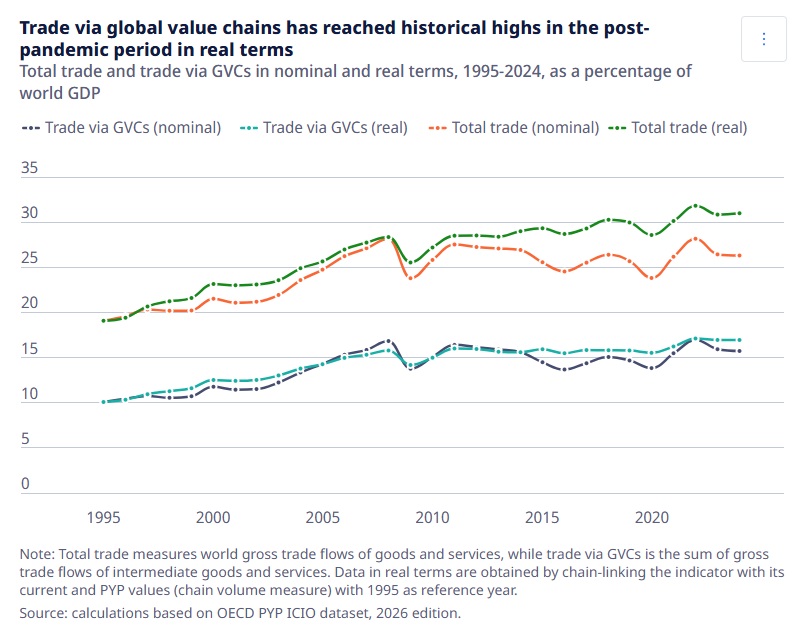
Let’s check on that much maligned, sometimes given up for dead, globalization. We can report that despite some’s wishes and others’ expectations, globalization is still going strong. The United Nations Trade and Development organization (UNCTAD) reports that,
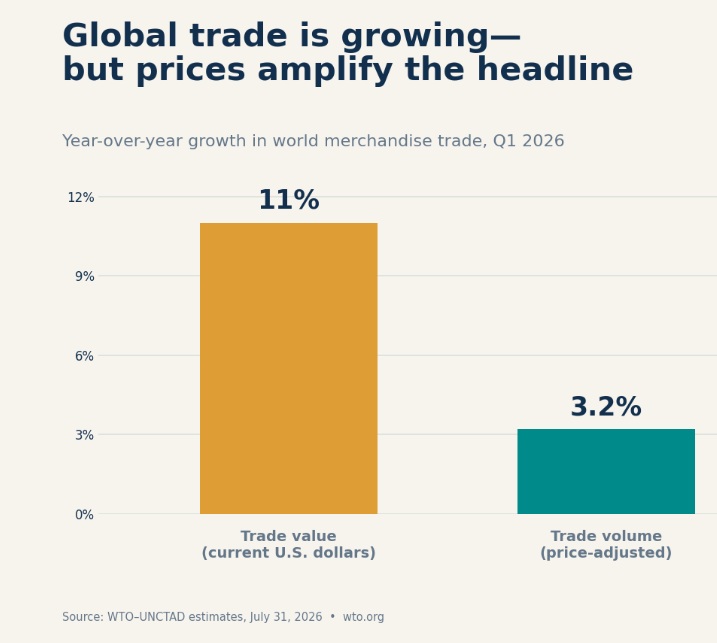
“Global goods trade is estimated to have reached approximately US$13.7 trillion in the first half of 2026, up 12.5 % from the same period in 2025. Services trade grew by 10.5 %. Together, goods and services added around US$2 trillion to global trade, putting it on course for a record annual value.”
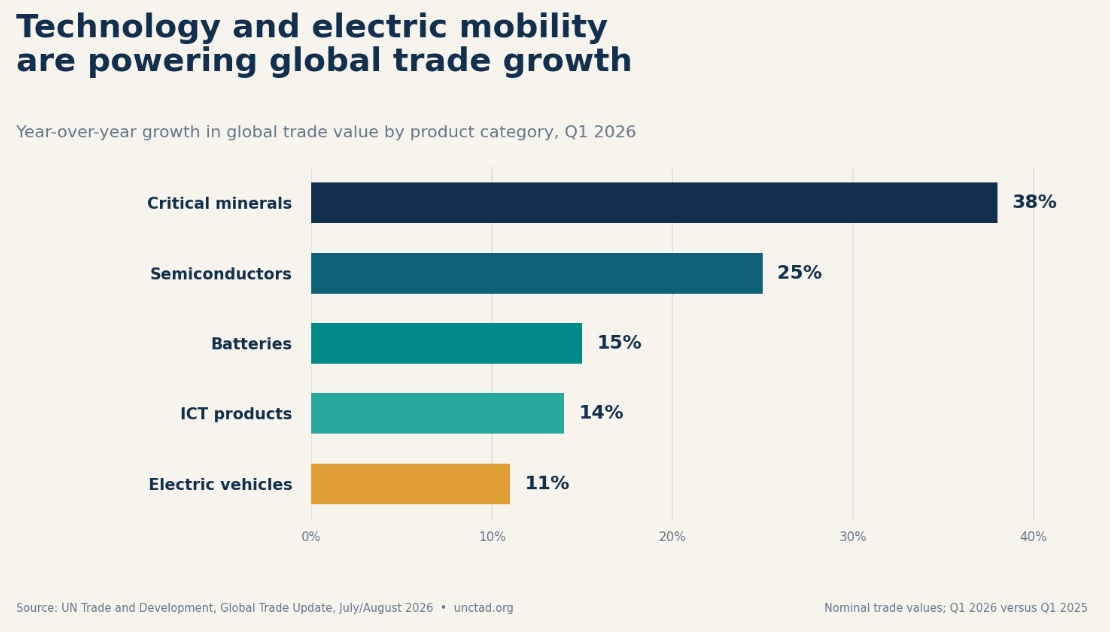
Of course, part of the reason for the increase is due to higher prices but not all. Some of the increase in trade is due to—you guessed it—components for AI, including a 38 percent increase in critical minerals, 25 percent for semiconductors, and 14 percent for ICT products. There was also a large increase in batteries (15%) and electric vehicles (11%). A large part of the trade equation is supply chains, which also remain global. Trade is not just finished goods but also the components comprising those products. The OECD reports that “trade via global value chains has reached historic highs in the post pandemic period.” You can see this in the third chart below. Globalization is not dead and won’t die absent a cataclysmic event. And that’s a good thing.
India and the iPhone
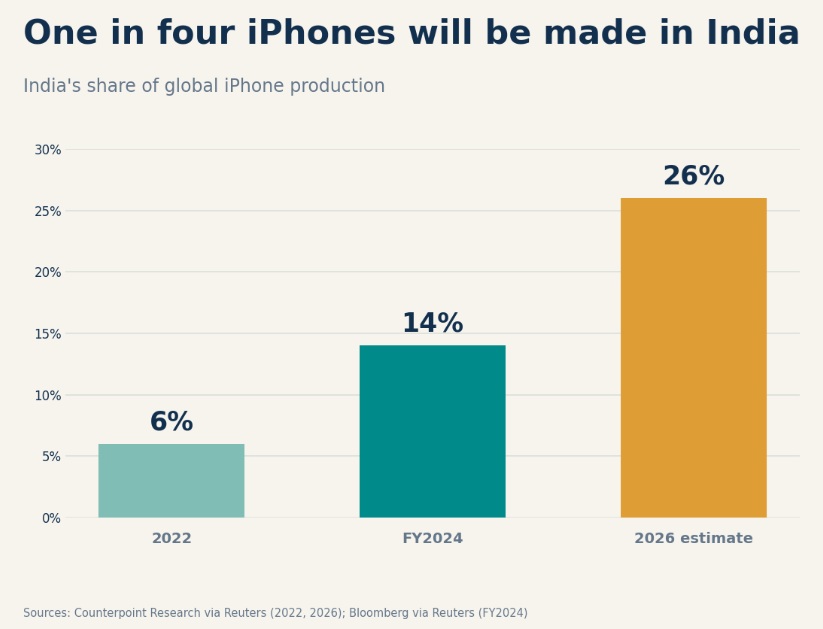
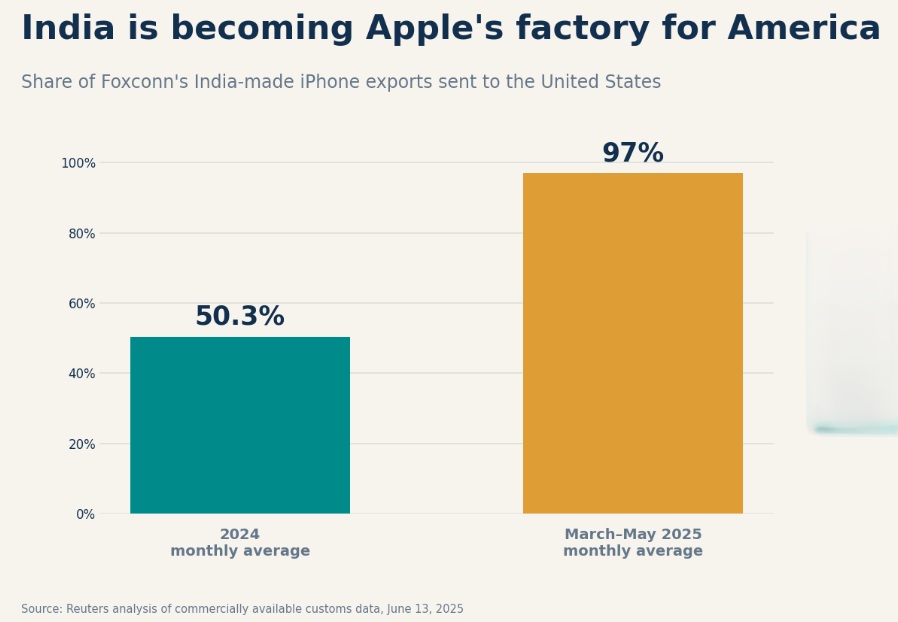
Speaking of supply chains, how is Apple’s diversification into India going? Pretty, pretty good. India produced just 6 percent of the world’s iPhones in 2022. This year, it is expected to produce more than one in four, or 26 percent to be precise, according to Counterpoint Research. Apple assembled $14 billion worth of iPhones in India in fiscal 2024. By spring 2025, 97 percent of Foxconn’s India-made iPhone exports were headed to the United States, up from a monthly average of 50.3 percent in 2024. Apple’s need to diversify was obviously key but India policy also played a role. Production-linked incentives rewarded exports. Modi’s government has proposed shielding foreign companies from Indian income-tax liability when they provide machinery and store components for contract manufacturers through 2041, a provision that comes in handy for Apple. However, India is mostly assembling the iPhones. Nearly all the components are coming from Taiwan, South Korea, Japan, and, yes, China. In fact, China probably remains the largest single source of imported modules, subassemblies, tooling and production expertise for India. But India is hoping to make more components. Foxconn invested another $1.5 billion in an Indian unit producing electronic components and assembling iPhones. Of course, China is a bit concerned about this since they want to make everything and import nothing. As we wrote previously, in early 2025, Chinese employees were prevented from traveling to Foxconn’s Indian plants, some workers were recalled and shipments of specialized equipment were held up. The India-China relationship and competition is as important as the U.S.-China relationship and competition.
China Corner: Jane Austen Consumption
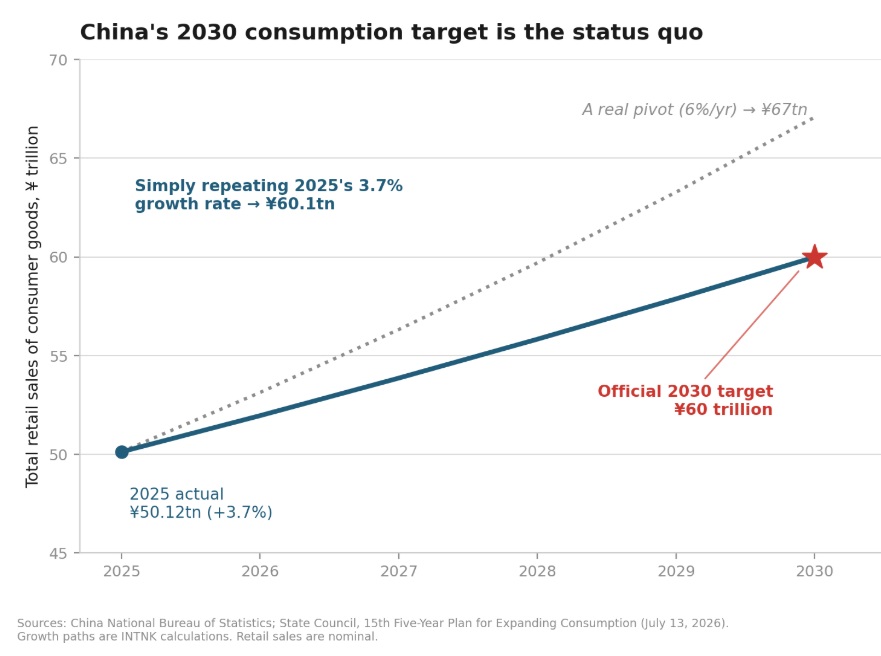
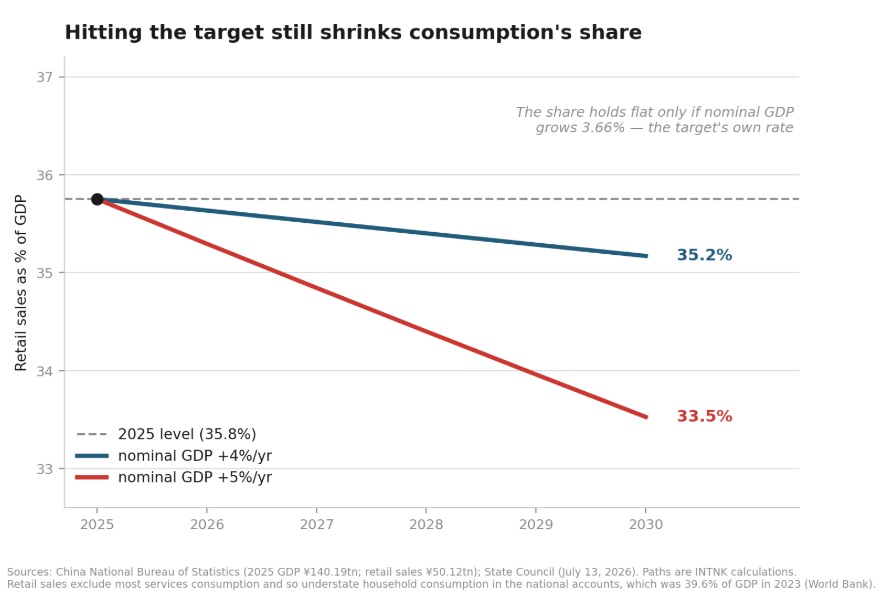
Lots of economists, including Chinese economists, have been calling on China to introduce policy to increase consumption. On July 13 the State Council approved the 15th Five-Year Plan for Expanding Consumption, setting a 2030 goal of roughly ¥60 trillion in total retail sales of consumer goods. Mission accomplished? Well, it is the second consecutive planning period in which building “a strong domestic market” ranks among Beijing’s top three priorities, which tells you something about how the first one went. We did, God help us, some math. Retail sales reached ¥50.12 trillion in 2025, up 3.7 percent. Getting to ¥60 trillion by 2030 requires compound annual growth of 3.66 percent. The centerpiece of China’s consumption pivot is achieved at current trend. A genuine rebalancing, call it six percent a year, would land nearer ¥67 trillion. But let’s look at this in terms of share of GDP. Retail sales equaled 35.8 percent of China’s ¥140.19 trillion economy last year. Hit the target while nominal GDP grows 4 percent and that share falls to 35.2 percent; at 5 percent, to 33.5. The plan lifts consumption’s share of the economy only if the rest of the economy grows more slowly than consumption does–that is, only if China underperforms. No, China is not serious about raising consumption. It is serious about increasing manufacturing. June exports hit a record $412 billion, up 27 percent, with semiconductor shipments up 122 percent. Capital still goes where it has always gone.