We talked to a group of high school kids this week about careers in supply chains and trade, which provided plenty of evidence that the youngsters ahead of us in line at the ice cream truck we talked about last week most definitely looked older than high school students. Sigh. Years ago we were invited by a friend to talk to a high school class on career day. We were the last speaker and our talk took place just before lunch, so the students were not in the mood for such information. In fact, as we talked, we could see that not a single one of them was paying attention. A number appeared to be sound asleep. And yet, what could we do but finish our presentation? And so we talked to an audience of no one. We remember leaving the classroom, our tail between our legs, thinking that perhaps we should head to the nearest bar for a couple of stiff ones. This week’s talk went far better. That’s partly because we didn’t just yammer at them but instead had them play a trade game using candy. We gave each student a small bag containing an assortment of candy. We asked them to write down the value of the bag. Then we told them to trade with other students. Perhaps one student who had a Snickers bar preferred a Tootsie Pop or another hankered for Skittles and was willing to trade their Twix bar for them. At the end of their trading session, we asked them to write down what they now thought the value of their bag was. The vast majority of them valued their new bag at…Wait, we won’t give it away. You will have to play the game yourselves. We can say that at the end of that talk, we felt no need for a double shot of bourbon. The students were actually engaged this time. And so we hope you will pay rapt attention for why there are no quick fixes for the dire straits of Hormuz, the long-term solution to our energy woes, and what is going on with China and Indonesia holding joint naval exercises. It’s this week’s International Need to Know, dropping Reese’s Peanut Butter Cups of international information, coupled with the Juiciest Fruits of global data.
Without further ado, here’s what you need to know.
No Quick Way Around Hormuz
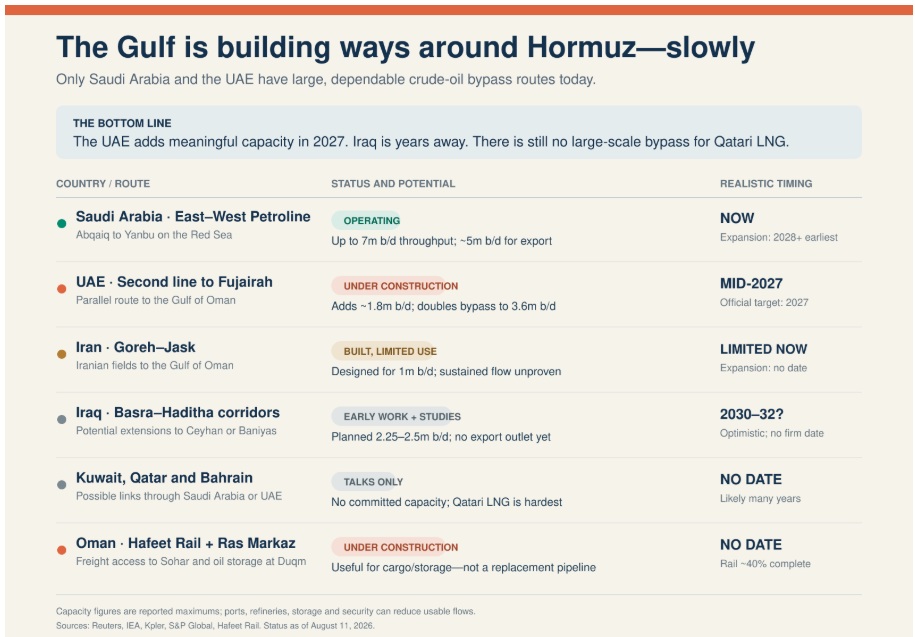
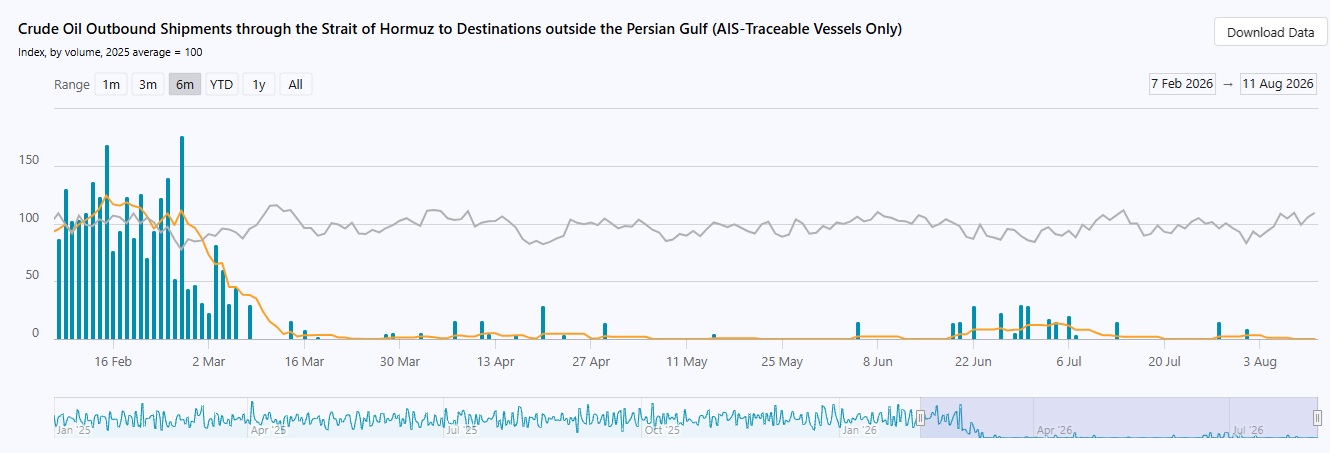
Hey, what do you know, the Strait of Hormuz is still closed, or at least mostly so. The war is not over and it’s unclear when it will be. We see some people asserting that already there are attempts to build alternatives to the Strait of Hormuz so eventually Iran’s leverage will lessen. But these efforts are complicated and will likely not bear fruit (or gas or oil) soon. Saudi Arabia and the UAE are the only Gulf producers with large operating crude-oil bypasses. Saudi Arabia’s East–West Pipeline can move 7 million barrels a day to Yanbu, although only about 5 million can be exported after supplying western refineries. Riyadh is considering adding 1–2 million barrels, but officials have offered no completion date, and the project would take years and cost millions. The UAE’s project is more tangible: a second pipeline to Fujairah is halfway completed and could double its bypass capacity from 1.8 million to 3.6 million barrels a day by mid-2027. Iraq has begun work on a 2.5-million-barrel Basra–Haditha pipeline. The absolute earliest any of this could happen is 2030–32 and even that is optimistic. Meanwhile, Kuwait and Bahrain are discussing connections to Saudi or UAE systems. Qatar faces the hardest problem: LNG cannot simply be sent through an oil pipeline. It would require a huge gas line and a new liquefaction terminal outside the Gulf. Even if they are completed, these projects will not replace a waterway that in 2025 carried roughly 20 million barrels of oil and products daily, and almost 20 percent of global LNG trade.. For that, something else is needed.
Another Way Around Hormuz
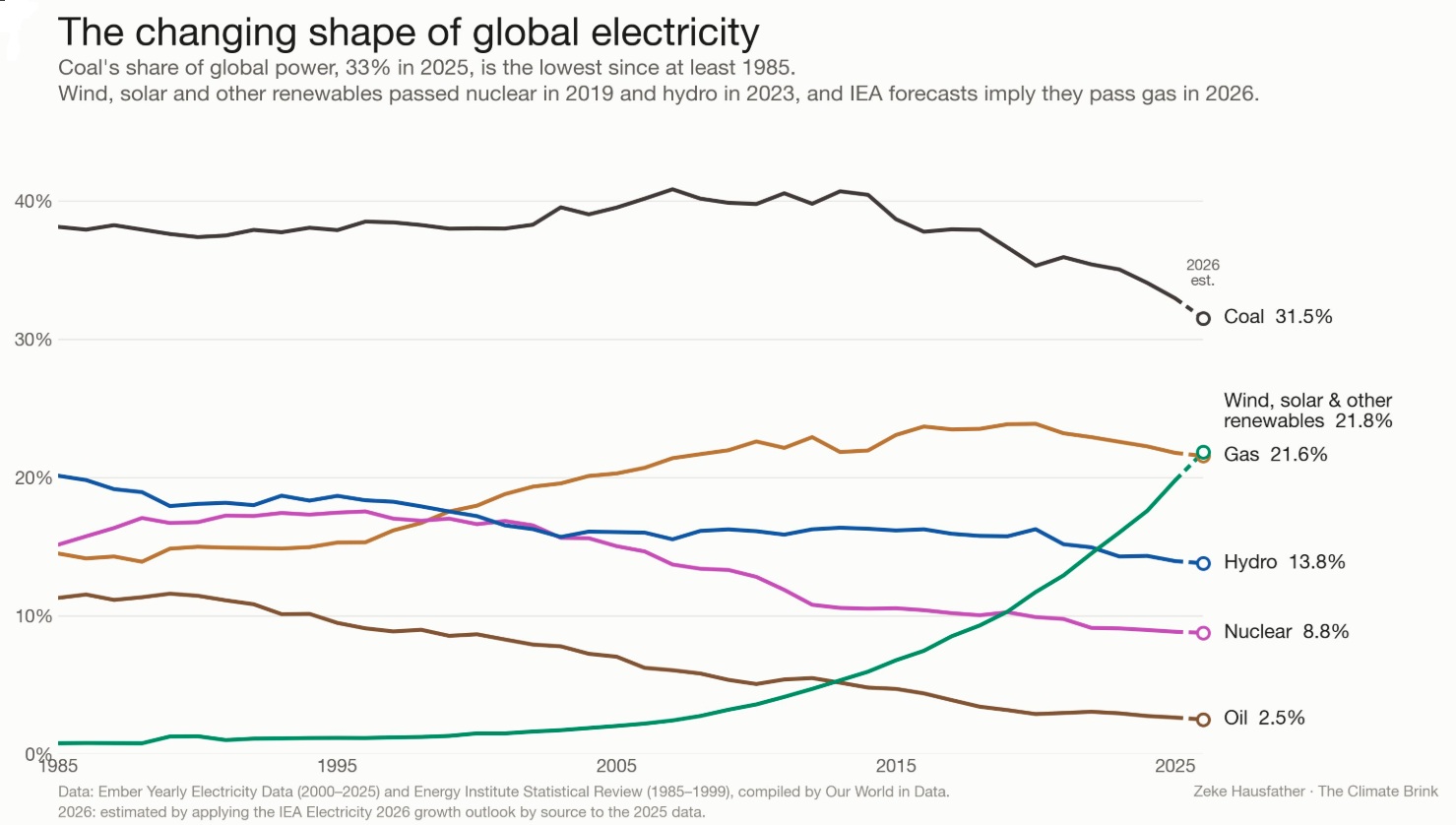
The world is electrifying and we don’t just mean metaphorically. The world is increasingly turning towards electricity, whether for vehicles or other uses. And fortunately a larger share of that comes from renewables. The percentage increase of renewable energy, especially solar, is stunning, as you can see in the chart below generated by Zeke Hausfather (what a name!). Wind/solar and other renewables are projected to account for 21.8 percent of global electricity by the end of this year. Note the upward slope of that line. It has zoomed past oil, nuclear, hydro and projected to surpass gas this year. If trends continue, and there’s no reason to think they won’t, renewables will soon make up a larger share of global electricity than any other energy source. Ports are busy electrifying cranes and other equipment. EV sales around the world, as we’ve documented here, continue to go up. Electric trucks are progressing. Two big challenges are agriculture and manufacturing. Those will be much more difficult to electrify. Fortunately, many are working on the problem. In the meantime, the more abundant, cheap, clean energy, the better will be our world. And eventually we may not care about that pesky Strait of Hormuz. In the meantime though, fuel and other product prices are vulnerable to Hormuz and the whimsy of political leaders.
China Corner: Rollin’ With Indonesia
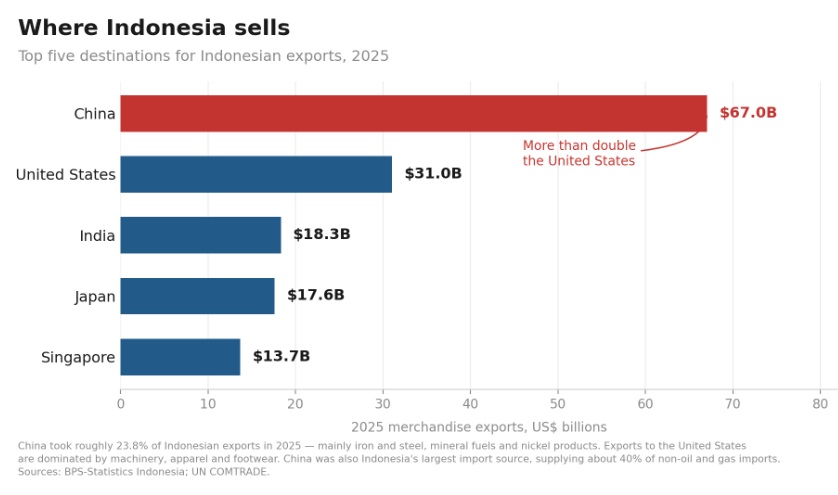
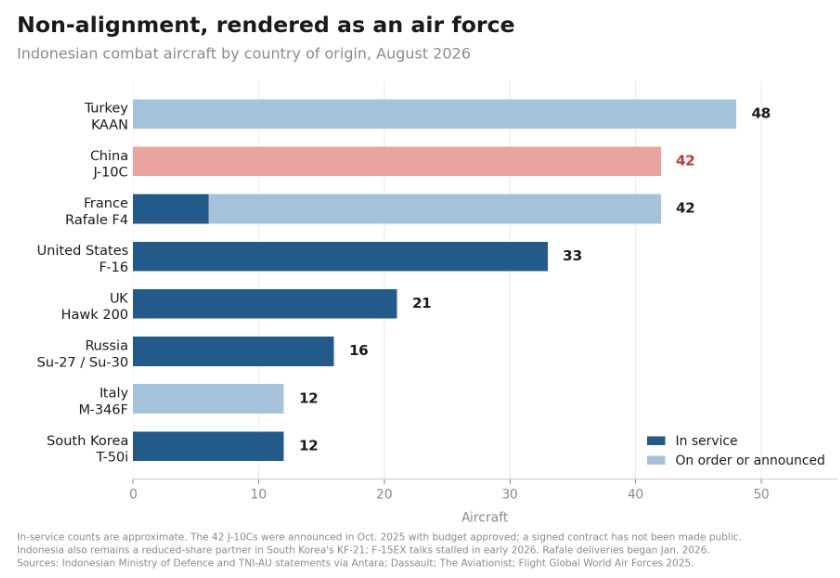
You can tell a lot about someone by their friends. China’s friends are generally not people we want to hang out with, such as Iran and Russia. But now China is hanging with Indonesia, or at least their navies are. We talk a lot about how important India is for a variety of reasons, including that it’s the most populous country in the world. We don’t talk enough about Indonesia, the fourth most populous country in the world. Its relations with China and the rest of Asia will say a lot about what that region’s future will look like. So we read with interest China’s announcement that it would conduct a joint naval exercise with Indonesia just east of Taiwan. While we await Indonesia’s confirmation, let’s ask why it might join in such an exercise. China is undoubtedly happy to have a partner, especially Indonesia, in this exercise. It gives them street (strait?) cred. So what’s Indonesia up to? Follow the money and the hardware. China buys more Indonesian exports than the next two customers combined and supplies roughly 40 percent of Indonesia’s non-oil imports. And last October Jakarta announced plans to buy 42 Chinese J-10C fighters, its first major Chinese arms purchase. But Indonesia is also practicing its version of Vietnam’s bamboo diplomacy, swaying among major powers. Its current fighter fleet and procurement pipeline spans American, Russian, British, French, South Korean, Turkish, Italian and Chinese airframes. It is preparing to drill with the U.S. in Super Garuda Shield this month. And one other complicating factor in all of this: more than 300,000 Indonesians work in Taiwan. What a complicated web our world weaves.