My great grandfather was shot and killed in a small town in West Virginia. I learned of this decades ago at my grandfather’s funeral from a great aunt. Years later I tried to determine if it was true. Part of the story was that the court case involving the shooting made it all the way to the West Virginia Supreme Court. My Uncle Jim realized that meant there was a way to verify the story. Jim guided me on how to look up the case—this was before the Internet—by poring through reference books at the Library of Congress (which I had access to as a staffer for a member of Congress). I can remember excitedly calling my uncle and telling him I had discovered the case, doing so via the methodology he had instructed me in. Jim worked as a corporate lawyer at a parking company for 52 years where I’m sure he did an excellent job but I like to think this was his best legal work. When I lived in D.C., I always enjoyed playing tennis against him and his friend, Scottie, who smoked cigarettes, sometimes while playing, which I was both concerned about and perversely admired. They were both in their 50s at the time and played doubles against me as a single. Now that I’m older with a knee replacement, I admire their play and camaraderie even more. It must have been a bit annoying to play against a young, cocky pup. We didn’t speak often about it, but I remember one time discussing his time in Vietnam, where he served in the Army. I’m a little hazy about the details at this distance but I remember he told me about an excursion into Cambodia, which was officially not where they should have been. Jim, I should note, loved dogs, and when I visited, I always enjoyed playing with the canine de décennie. He loved his family—his wife, Bev, and his two kids, Jimmy and Meredith; Meredith’s husband, Robert, and their two children. Jim was always a delight to talk to and I was hoping to converse with him one more time when I flew to DC two weeks ago as he fought cancer and strokes. Alas, in what seems like an extreme measure to avoid seeing me, Jim passed away on November 4. He was a helpful, interesting, wonderful guy. RIP.
Without further ado, here’s what you need to know.
Globalization: Nvidia’s Supply Chain
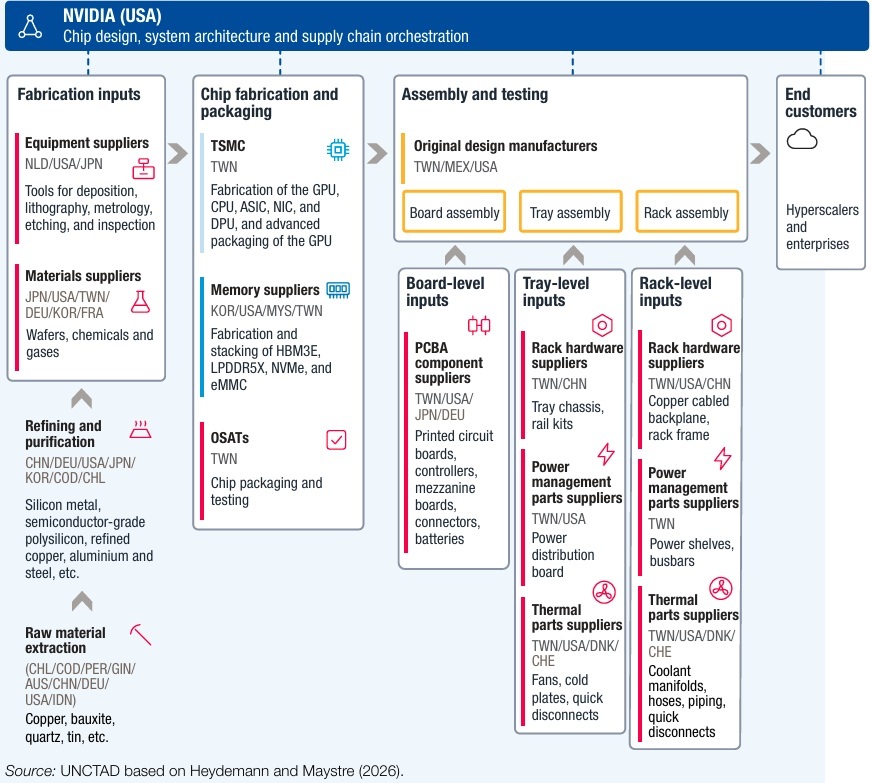
Nvidia is an American success story, Jensen Huang is another in a long line of immigrant marvels, the main reason America is a success story. But Nvidia’s supply chain is a wonder of globalization. The United States supplies much of the chip design and critical manufacturing technology, while an extensive Asian manufacturing network produces the processors, memory, packaging, and other components. Nvidia is a fabless semiconductor company, which means it designs chips but contracts out their physical manufacturing. Nvidia’s principal manufacturing relationships include TSMC and Samsung for semiconductor fabrication, SK hynix, Micron and Samsung for memory, and several other companies for packaging, testing and system assembly. And, of course, those companies, including American Micron, produce and source their components all over the world. The critical minerals and other substances that make up these components are sourced from Chile, Peru, Democratic Republic of the Congo, China, Indonesia and many other places. China wants to be completely independent in chips (see story below). So, too, the United States. Maybe other countries do too. We want to be six foot three and age 27. Neither is likely. Globalization has created one of the great technological wonders of the world: advanced semiconductor chips that allow for a new intelligence solving the world’s most complicated math problems (and creating wonders and challenges alike). The story playing out last week and this week is more complicated than it looks. (Sunday’s Trump Tracker covered this in more detail)
Impacts of Cutting Work Week
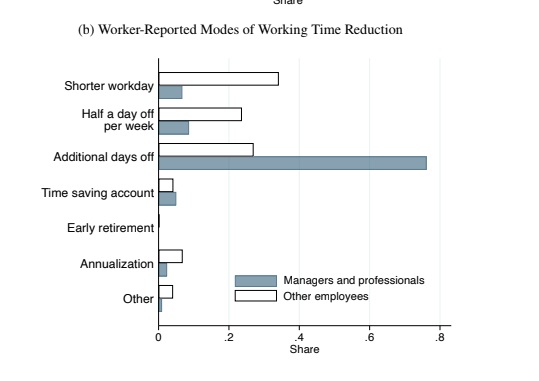
We hear the idea of a shorter work week more and more lately, including in light of AI advances. What would be the impact? We can get some data from a recent paper examining some of the effects of France reducing its workweek. In 2000, France cut the standard full-time week from 39 to 35 hours. Workers kept the same monthly pay, which meant employers were paying about 11 percent more per hour. To soften that, the government gave employers who adopted the 35-hour week a cut in payroll taxes, aimed mostly at low-wage jobs. The idea was “work-sharing.” If everyone works fewer hours, companies will hire more people to get the same work done. Because big firms (more than 20 employees) instituted the new law in 2000 but smaller firms not until 2002, the paper could compare the two types of firms during that two-year gap. Looking at financial data on these firms and separating the effect of the shorter week from the effect of the tax cut, the authors came to a variety of conclusions. First, firms cut hours but did not compensate by hiring more workers. Total hours worked fell by 6 percent. The tax cut provided to companies offset the cut in hours worked. But the effect was different on different types of workers. For managers and professionals, the policy worked as intended: shorter hours, the same pay, and more of them hired. For everyone else (clerks, factory workers, technicians), jobs and hours fell. Those who stayed employed earned about 1.7 percent less per year. Workers also became more productive. Hours fell about 6 percent, but output fell only about 1 percent. Workers got more done in less time, though they reported feeling more stressed. And there was a cost to all of this. About 70 percent of the lost output came out of workers’ pay, almost all of it from lower-skill workers. About 30 percent came out of company profits. Not sure how this will make those in favor and those opposed to shorter workweeks feel. It’s also worth pondering how these findings play into the current challenges in France.
China Corner: China’s Chip Policy
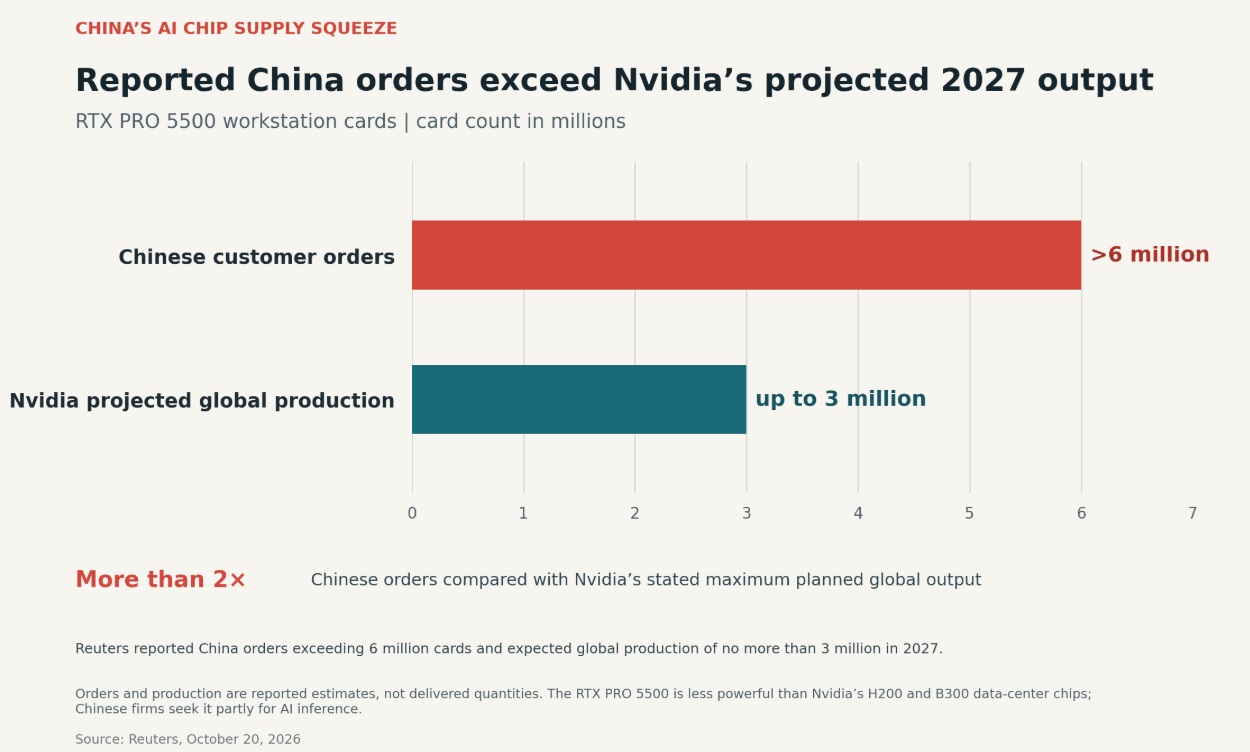
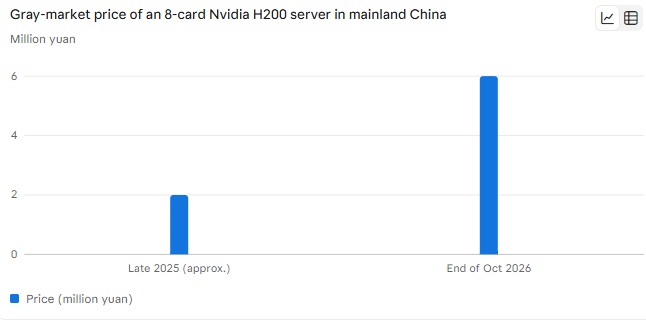
People cuddle the word “or” like it is a cute kitten and shun the word “and” like a rat scurrying through the kitchen. We are all mischaracterizing these words. Take China’s semiconductor industry and policies, for example. In the current Nvidia scandal, those defending the company’s approach to supplying chips to China will state what they are doing is keeping China addicted to our chips which will stop China from developing its own indigenous chip industry. They paint an “or” picture—either we sell China chips or it creates its own chip industry. But this is an “and” situation. China currently needs chips for AI and it is trying to build its own industry. If the U.S. eliminated all export controls, China would still try to ramp up its own semiconductor industry, just as it has for autos, phones, airplanes and dozens of other industries. Similarly, China’s government has tried to discourage its AI companies from buying high end chips from abroad and these companies are desperately trying to acquire these chips, both because of their quality and because of a shortage of them. In analysis, use “and” more and—ha!—“or” less.