We read about a study the other day that claims a large percentage of extremist students on the left and the right are mentally ill. Because we are filled to the brim with work at the moment, we did not have time to read the study so have no idea if it’s valid or not. But if it is, this goes a long way towards explaining the times we live in. And if students on the far, far left and right are more likely to be mentally ill perhaps that’s true of extremists of all ages–it certainly fits our anecdotal experiences. Extremists are generally the loudest, whether on social media, in protests, on the streets, basically wherever discourse takes place. News media panders to them to create conflict which sells pixels and paper.
The other day we shared beer, food and conversation with a friend who noted most of us are reasonable even if our views differ here and there, but he said that there’s a segment—a very loud and passionate one—that grabs all the attention. But if most of them are crazy, clinically so, the crazed and deranged are controlling our national dialogue. Of course, in our nonprofessional opinion one of them is running for high office. Our asylum may not be run by the inmates, but they’ve taken control of the intercom system. The question is how to grab the mic back. And so with as much sanity as we can muster, we consider suicide rates around the world, look at Indian data and ponder a proposed China Marshall Plan. It’s this week’s International Need to Know, providing hard-hitting WNBA-like international information and data.
Without further ado, here’s what you need to know.
Killing Us Softly
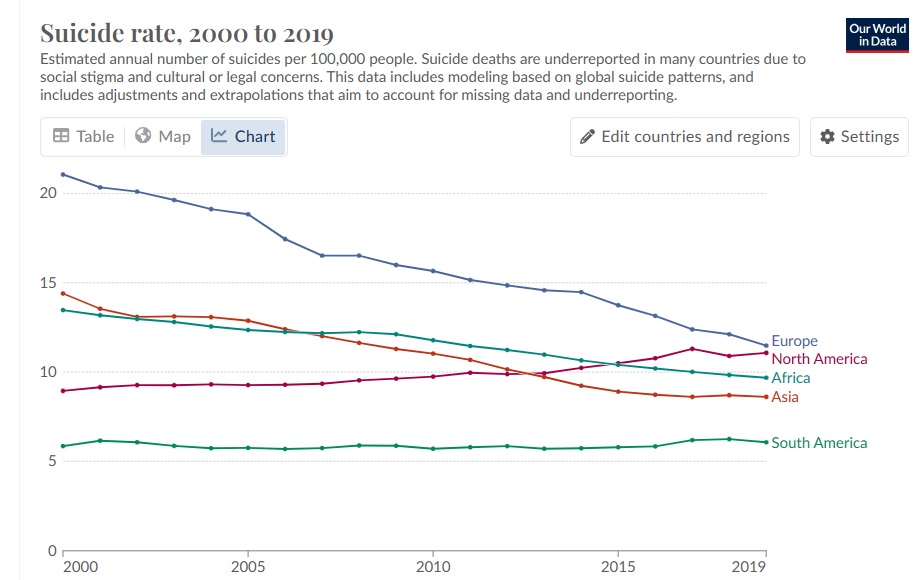
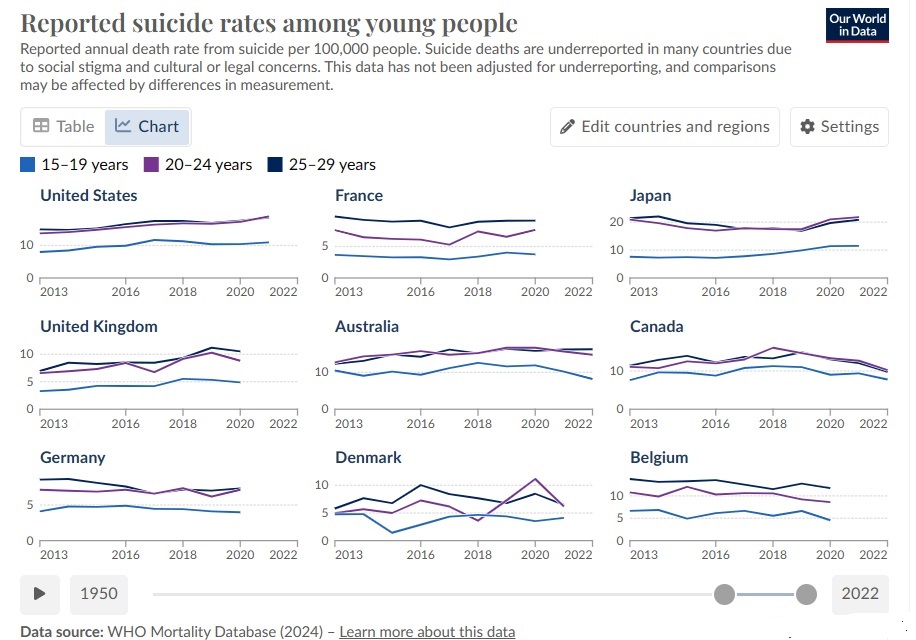
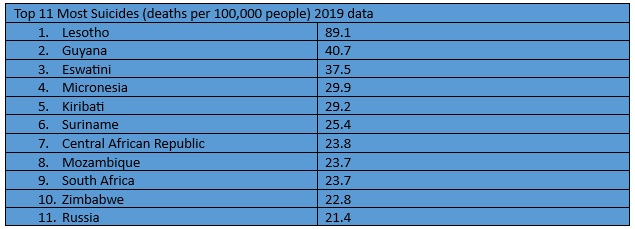
While reading an article about if you’re going to blame social media for the rise of mental illness* in the United States you need to explain why such increases are not happening in other countries with large social media usage, we started exploring suicide rates around the world. As you can see in the first chart below using Our World In Data for suicides for all ages, suicide rates in North America (driven by the U.S.) have gone up over the last decade. But during that same time period, they decreased in Europe. Africa and Asia have seen steady declines. For whatever reason, South America is steady as she goes with lower suicide rates. The second chart below lists select countries suicide rates for three younger age cohorts since 2013, roughly approximating the age of social media. The third chart, a table of the eleven countries with the highest suicide rates for all ages, is also interesting. Seven of the eleven countries with the highest overall suicide rates are in Africa. And, of course, there’s the death cult masquerading as a country sitting at number 11.
*It is mere coincidence that mental illness gripped our reading this week and not that we are going crazy from overwork
Indian Data
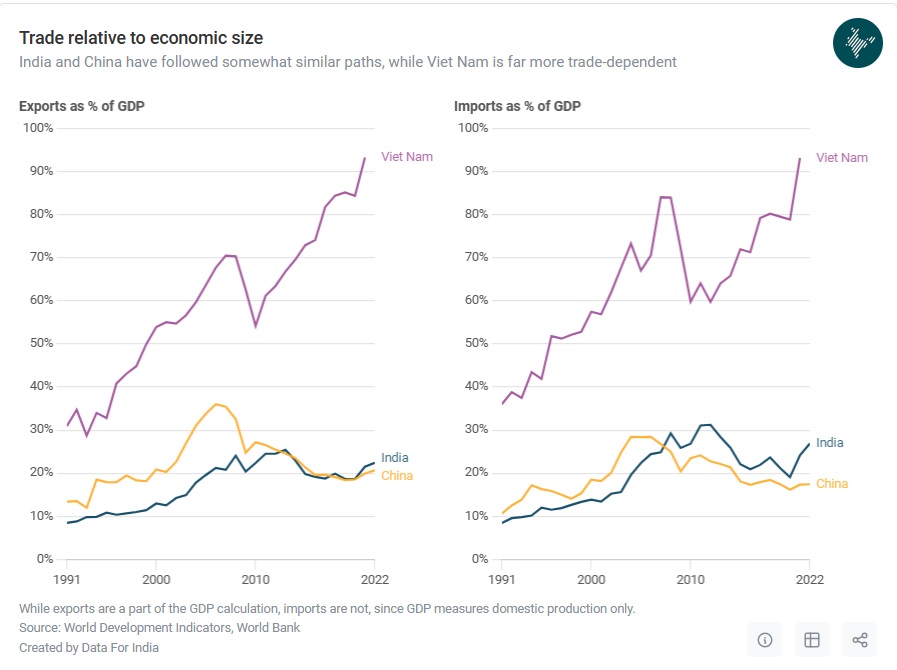
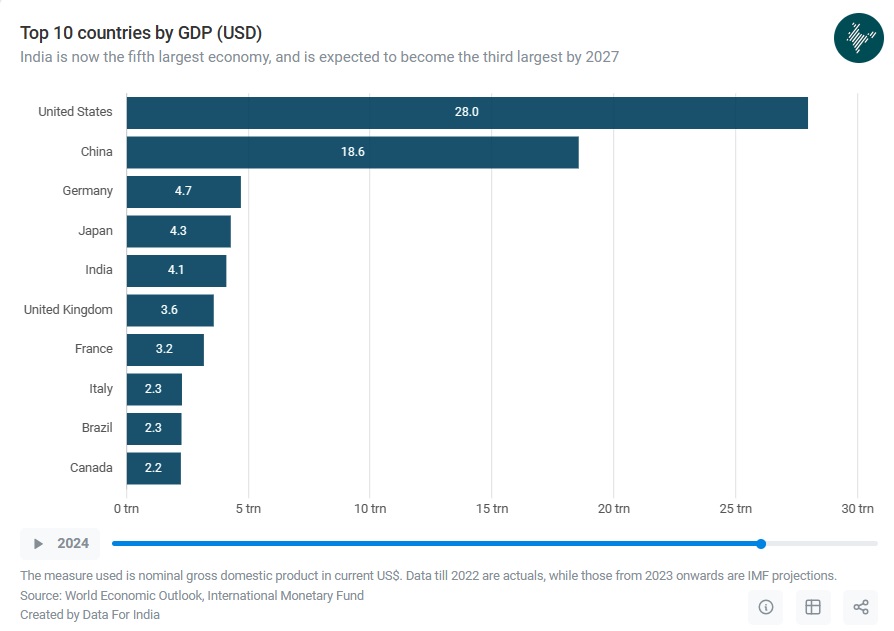
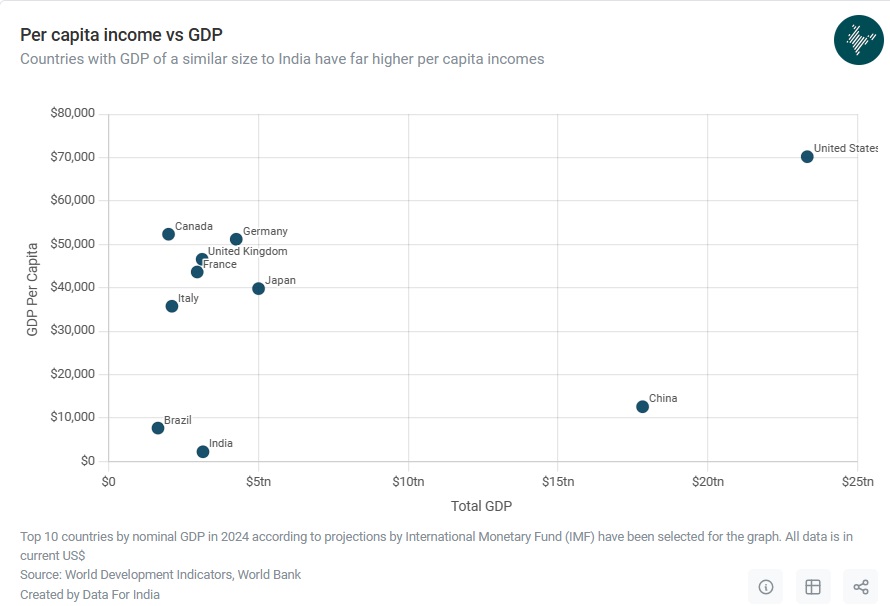
Hey, India, the world’s most populous country, had an election. Narendra Modi won a third term but didn’t get the huge majorities he was hoping for. Whether that’s good or bad we will leave to other folks to decide but in our continuing quest to understand this large country better, we went looking for data. And thanks to a link from Marginal Revolution, we found some at the Data For India website. There’s lots to digest there but we offer two tasty morsels for you to sample to understand India’s economic present and guess at its future. In the first chart below from the site, you can see exports and imports as a percentage of GDP for India, China and Vietnam. India has caught up to China in exports and is now well above it in imports (Vietnam is crazy trade dependent, perhaps too much so). The second chart below shows India now has the fifth-largest GDP in the world and likely will soon pass Japan to become the fourth-largest. But this is partly because India is so large. If we look at per capita income vs. GDP in the third chart below, India doesn’t do so well. India is still relatively poor, though getting richer by the week. One key measure of success of a third Modi term is India moving up in that third chart.
China Corner: A China Marshall Plan?
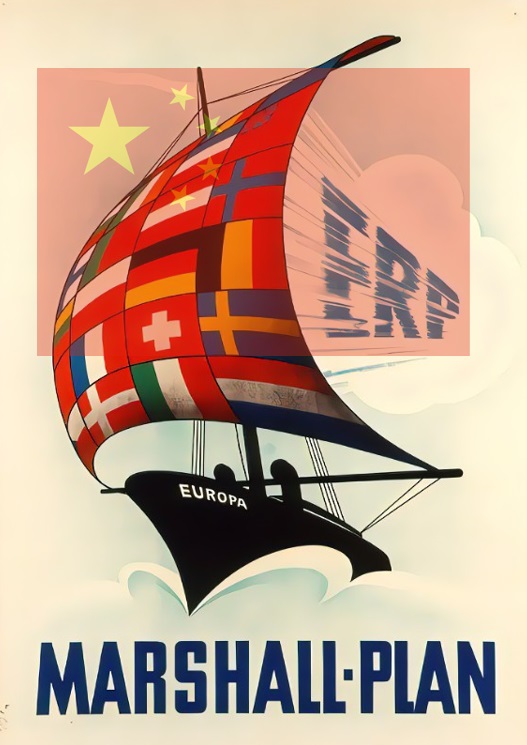
Lots of folks worry about China’s influence around the world, and often for good reason. But what if China decided to do a “Marshall Plan” to help developing countries in the green transition? Well, that would be a welcome development. It’s also what Huang Yiping, a member of the Monetary Policy Committee of the People’s Bank of China, is recommending, according to an article in the South China Morning Post. At a forum organized by Tsinghua University in Hangzhou, Huang said, “Since every country needs to make the green transition, and developing countries find it particularly difficult, if we share the burden, we cannot only help them achieve the goal, but also elevate China’s global leadership and influence in green development.” This would be a better way for China to deal with its overcapacity issue in the clean tech sector, in everything from solar panels to wind turbines. If China is going to subsidize those industries, and if the U.S. and Europe are going to fight those exports with tariffs and subsidizing their own industries, it would be smart of China to provide these goods at a cheap discount to developing countries that need them. Marshall would be far better than martial.