More than a decade ago we enjoyed watching Johnny Cash, Lyle Lovett, Earth Wind and Fire and others perform in a relatively small outdoor stage with Elliott Bay as their backdrop. Concerts on the Pier it was called and we have many a fond memory of them. Until the pier fell into disrepair and was not fit to hold people, amps or drum sets. It was never repaired. Being an American city, inertia, already one of the strongest forces in the universe and perhaps the strongest in American public policy, set in and this wonderful venue, these wonderful musical experiences were no longer. But last weekend, on a wonderful autumn day, we visited the new waterfront park in Seattle.
The park was planned many years ago when the city decided to tear down the viaduct that traveled along the waterfront and build a tunnel instead. That opened up much real estate and offered an opportunity to connect Seattle’s largest tourist attraction—Pike Place Market—and downtown generally, more directly with the waterfront. Previously the waterfront felt separate from the rest of the city. Whether the new park accomplishes this in the best way possible we’re not sure.
But what we are most excited about is Concerts on the Pier will be returning. We excitedly strolled on the Pier where next summer artists will croon and rap and play. Or at least we presume they will. We have seen no official announcement this will happen. If we were capable of crooning, rapping and playing ourselves we would try to get the whole thing started and hope others will follow. But in the meantime we rap about misplaced priorities, croak about the World Bank’s new Business Ready rankings and lay a bass line on China’s military build up. It’s this week’s International Need to Know, an amusement park of international information, a botanical garden of global data.

Without further ado, here’s what you need to know.
Misplaced Priorities
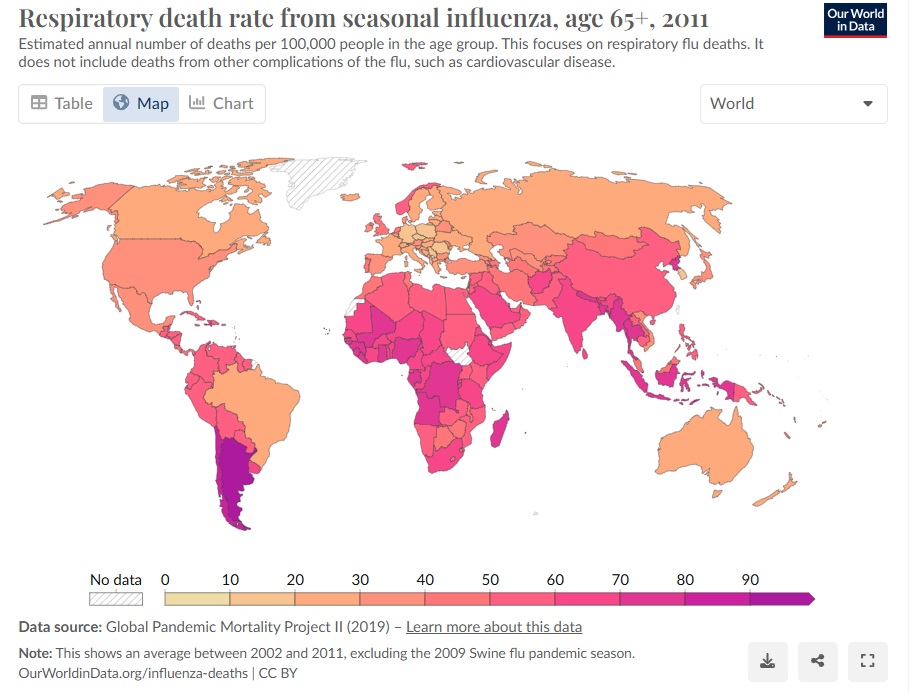
We are continually confused by the world’s priorities. We mentioned briefly a few weeks ago that we were felled by a virus like a tree at a lumberjack convention. It was not Covid, or at least repeated home tests came back negative for Covid. So we assume it was your standard issue flu, which basically made us unproductive for a week. And flu viruses do the same to millions of people around the world and kill around 700,000 people each year. During the pandemic we read about various efforts to create a pan-corona virus vaccine. In recent weeks and months we’ve read about other possibilities for such vaccines that would protect us from flu and other viruses and even many strains of the common cold. But since the pandemic, policy makers and the public treat viruses as not such a big deal even though they kill large numbers of people and cause billions in economic harm. And so, unlike during the pandemic, there is no operation warp speed to fast track these vaccines. The subject never comes up in any political debates or interviews here in the U.S. or in other countries. We spend lots of breath on other subjects of much less importance. Our cost benefit analysis of what issues and initiatives are important is very broken in public discourse. If only there was a vaccine for that.
Where Should You Start a Business?
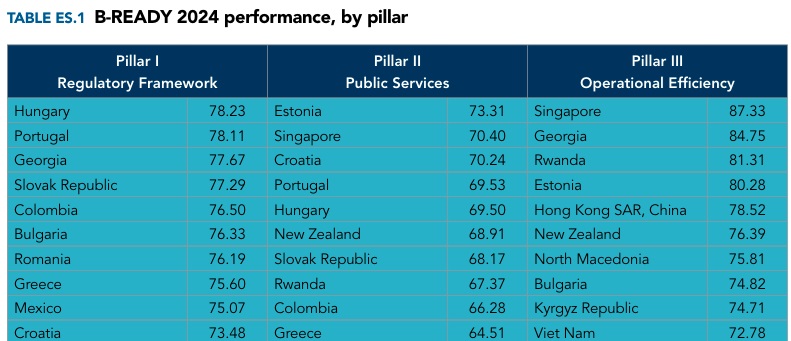
A few years ago the World Bank discontinued its Doing Business research and rankings when it was revealed that countries successfully pressured researchers to change the rankings. It turned out doing the business of Doing Business was difficult. But the World Bank is not giving up. Three years later it is back with Business Ready, which also aims to measure how easy it is to do business in a country. Yes, it will look at factors like regulatory burdens, reliability of utilities and other measures on how easy it is to start and run a business. But it will also assess the quality of regulations: “Do labor laws, for example, protect workers from being arbitrarily fired? Do they inadvertently make women workers less competitive than men and discourage them from seeking work?” The World Bank is starting off with 50 countries this year and by 2026 aims to have data and rankings for 180 countries. We have not read the whole report yet but did not see anything about how the Bank plans to resist countries pressuring it from changing its rankings. It’s great they may have improved the methodology but the real problem was the corruption of the process. Nonetheless, you can see below the top ten of the 50 countries ranked this year in the three pillars the Bank breaks the rankings into: a) regulatory framework. b) public services, and c) operational efficiency. It’s hard to make judgements based on a selection of 50 countries but frankly we are surprised by some of the countries in the top ten. It does not fit our anecdotal experience, which may say as much about our experiences as the rankings. We’ll watch with interest as they build the list of countries to 180.
China Corner: How Strong is China’s Military?
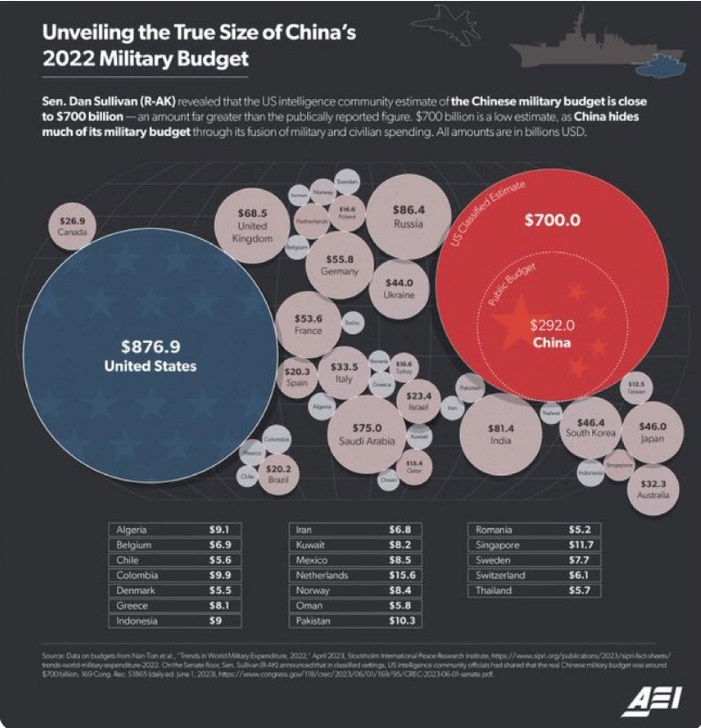
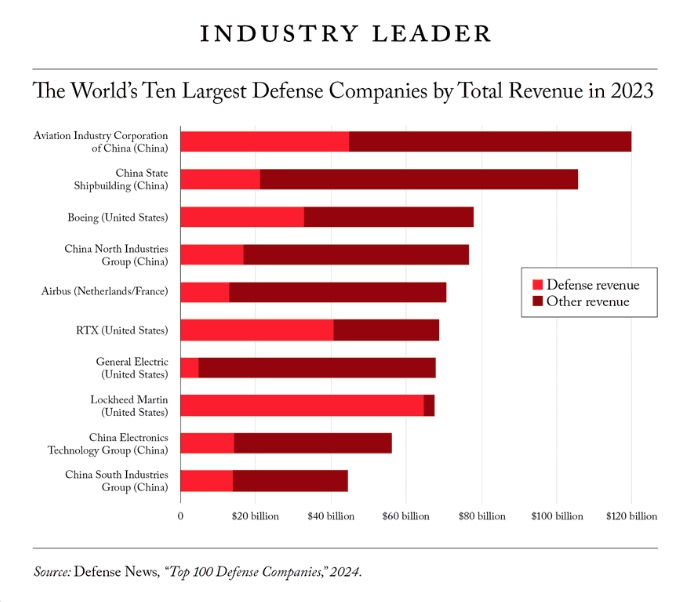
The challenge of China is not just that it has become increasingly authoritarian but that also it has become expansionist, both in terms of trying to change the world order to one that makes the world safe for authoritarianism and in terms of territory, for example, in the South China Sea. To do so, China has rapidly been building up its military. A new article in Foreign Affairs states “China is ready for war.” It also notes that “Chinese defense companies have increased production in nearly every category.” Mackenzie Eaglen, writing for the American Enterprise Institute, claims public information undercounts China’s military build up, “After accounting for economic adjustments and estimating reasonable but uncounted expenditures, the buying power of China’s 2022 military budget balloons to an estimated $711 billion—triple Beijing’s claimed topline and nearly equal with the United States’ military budget that same year.” And with drones ever more important militarily, it’s significant that China has three of the top five drone manufacturers in the world, including the largest, DJI. It is natural for a large country as it develops economically to also build up its military. But when it is an increasingly authoritarian one, bent on making the world order more in its image, that’s a challenge.