When I was six years-old or so, I was at the neighbor’s house playing with their kids while my parents were at work and school. We were young but clearly geniuses because we came up with the idea for a survivor wagon race. All three (or maybe there were four) of us would load onto the red Radio Flyer wagon and ride it down the hill at the bottom of which was a set of cement stairs. The idea was the last one to leap off the wagon was the winner. Genius, right? I am a bit competitive, so I was determined to be the last kid to jump off the wagon before it tumbled down the concrete stairs—but I waited just a teensy, eensy bit too long and I tumbled down the stairs with the wagon. My middle finger, the one you all have undoubtedly used at one point or another to send a stern message, got caught between the metal wagon and a cement stair, slicing the top mostly off, dangling from a thin piece of skin. My screams and crying alerted the neighbor’s parents who, in the absence of my parents, rushed me to the emergency room. However, the hospital could not sew the finger back on until my Mom arrived to sign some forms—presumably absolving the hospital of any liability and guaranteeing payment. In the meantime, the doctor placed my hand in a bowl of anesthetic with a towel covering it so I wouldn’t feel any pain. When my Mom arrived, she ran into the room, lifted the towel, saw the bloody, decapitated finger, looked away in horror, and rushed right back out of the room. One presumes that was when she signed the papers because the doctor then proceeded to sew my finger back together.
All of which brings us to the genius decision of the United States and Israel to attack Iran over the weekend. On March 1, Trump said military operations will continue until “all our objectives are achieved.” To which we asked, what are our objectives? Depending on the day, time and which government official is speaking, we have heard any number of objectives—in fact we’re probably well past a baker’s dozen. I’ll have to check the large Excel spreadsheet I created to see. As we wrote in Sunday’s Trump Law-Breaking and Corruption Tracker, “I hope this military action works out and the Mullahs are ousted and somehow a sane Iranian government, a democratic Iran, emerges. It is not at all clear that will be the result. The risks are huge and such a possible outcome is not worth the dangerous precedent that has been set.” It sure seems like we might be racing down a hill on a Radio Flyer wagon towards concrete steps with no liability forms signed and no doctor to reattach the finger.
But we’re not here to litigate U.S. foreign policy. We are here in a special Iran war edition to ask who makes the drones, what attacking Iran means for nuclear proliferation and what China’s energy revolution has to do with all of this. It’s this week’s International Need to Know, the Radio Flyer of international information, the sutures of global data.
Without further ado, here’s what you need to know.
Who Makes The Drones?
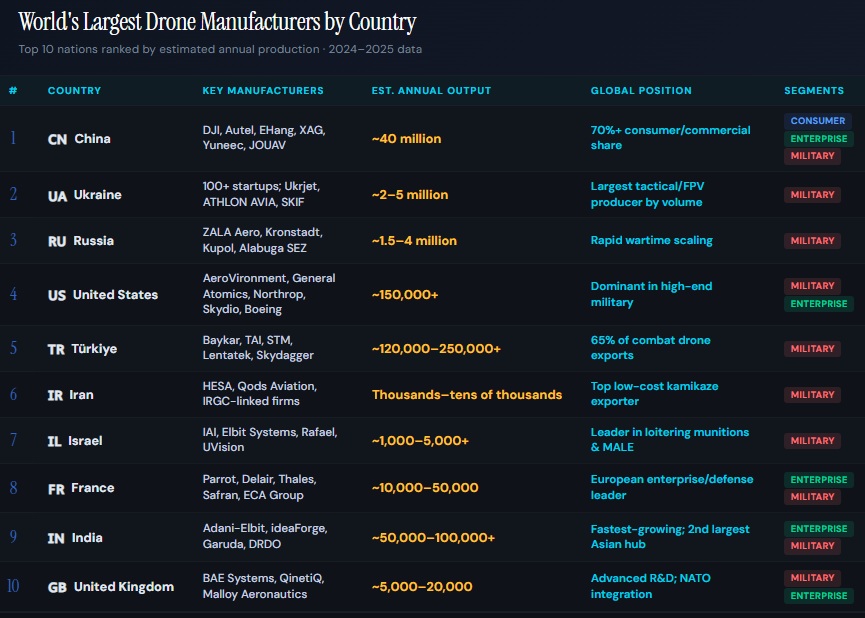
We wrote about drones nearly a decade ago anticipating their growing military importance and the dangerous precedents the U.S. was setting. You’ve probably noticed their increasing significance in recent military conflicts, including in the Ukraine – Russia war. Who manufactures drones is increasingly strategically essential. We list the top ten countries manufacturing drones in the table below. China is by far number one. Okay, you might reply, but they mostly manufacture drones for civilian purposes. Yes, but as Ukraine has shown to great effect, it is easy to convert civilian drones for military uses. Ukraine, by necessity, is now the second-largest manufacturer, followed by their enemy Russia. The United States is fourth with a heavy emphasis on military drones, albeit at high per unit cost. Turkey builds 65 percent of the world’s combat drones. Israel is number six with Iran right behind them. Iran’s drones are low cost. Since the start of the full-scale invasion, Moscow has launched at least 4,600 Iranian Shahed attack drones against Ukraine. Moscow and Tehran signed a deal in early 2023 for Russia to start production of the Iranian drones at Russia’s Alabuga Special Economic Zone. Of course, Russia also gets many of its drones from China, as well as much other material support.
List of Instances Air Power Alone Created Regime Change

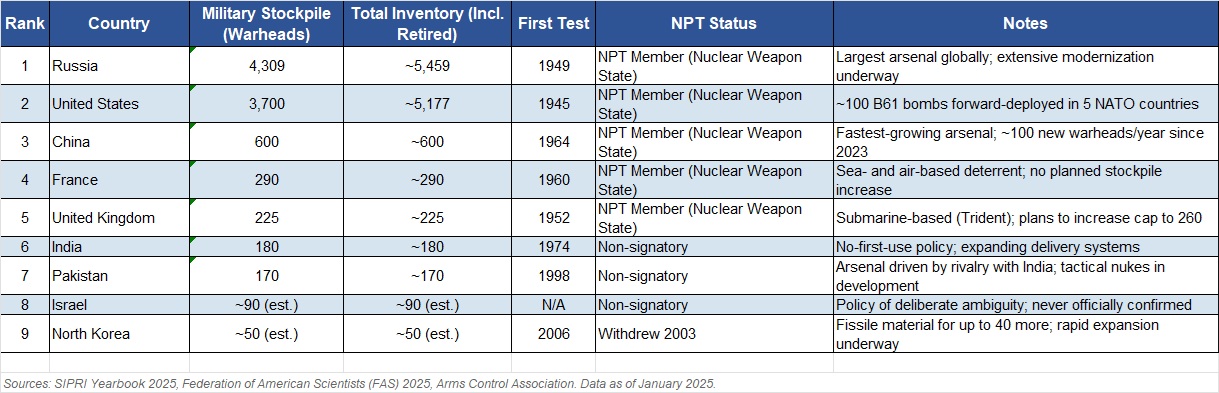
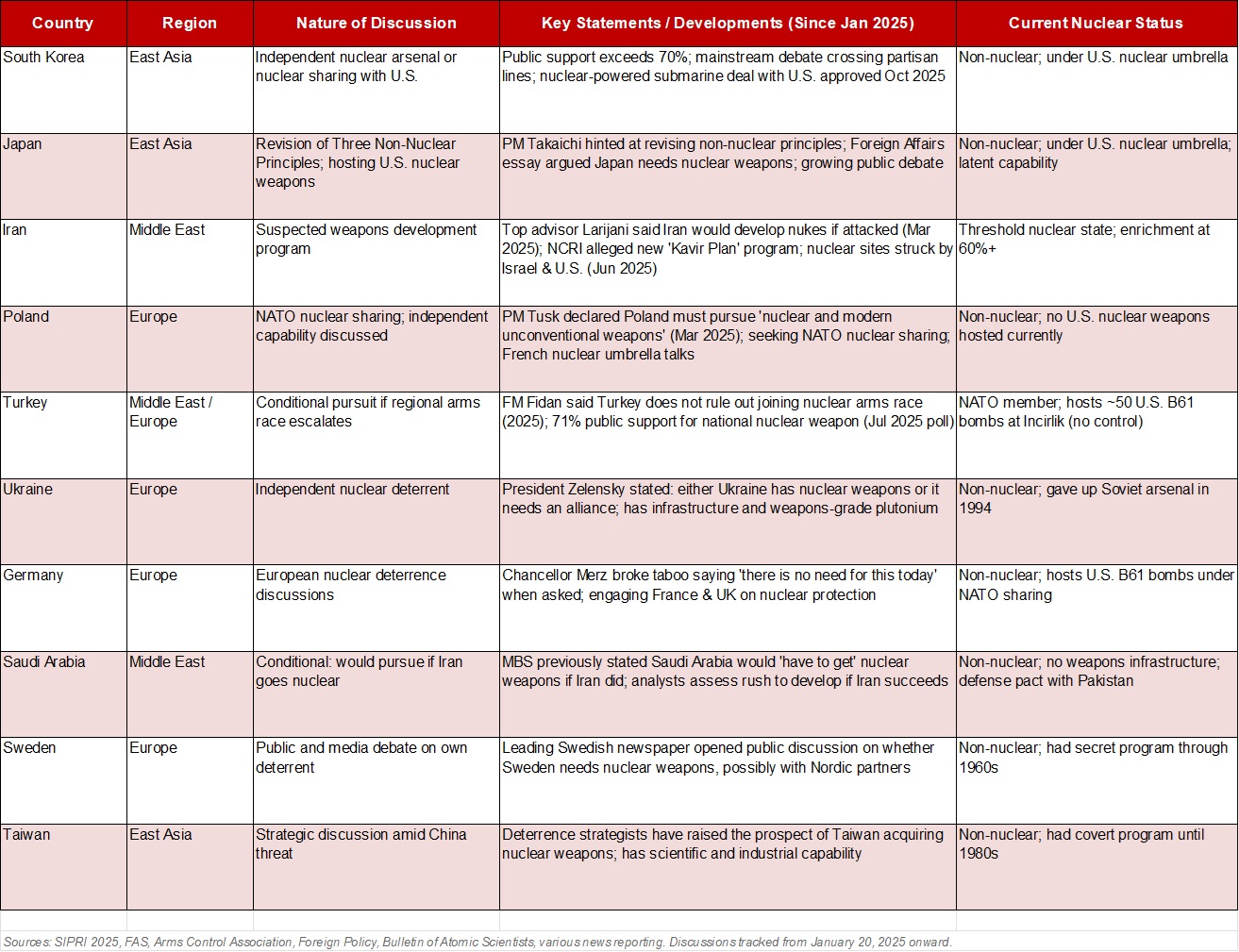
The Nuclear Option Part 2
Just about a year ago today, we wrote, “One likely outcome of this new 19th Century World Order will be nuclear proliferation. If you are a smaller country trying to battle the big states—whether China, Russia, the United States, or others—without the safety net of a rules-based order to save you, a dangerous but effective tool is nuclear weapons.” With the United States becoming more erratic by the month, with its removing Maduro from Venezuela, with the ongoing attacks against Iran, the incentive to seek nuclear weapons has only grown. In the 12 months since we wrote the above words, Poland’s Prime Minister told his parliament, “we must pursue the most advanced capabilities, including nuclear and modern unconventional weapons.” Turkey’s Foreign Minister Hakan Fidan stated that Turkey does not rule out joining a regional nuclear arms race due to concerns about Iran’s ambitions. Japan’s Prime Minister Sanae Takaichi hinted at a possible revision of the country’s three non-nuclear principles. Debate has begun in South Korea on the need for nuclear weapons, with broad public support for the nuclear option. These are rational decisions given the circumstances. Depending on your analysis of the effectiveness of mutual assured destruction theory, the world is about to get a lot more dangerous. Just in case, we’re rearming our liquor cabinet.
China Corner: Iran & The China Energy Revolution
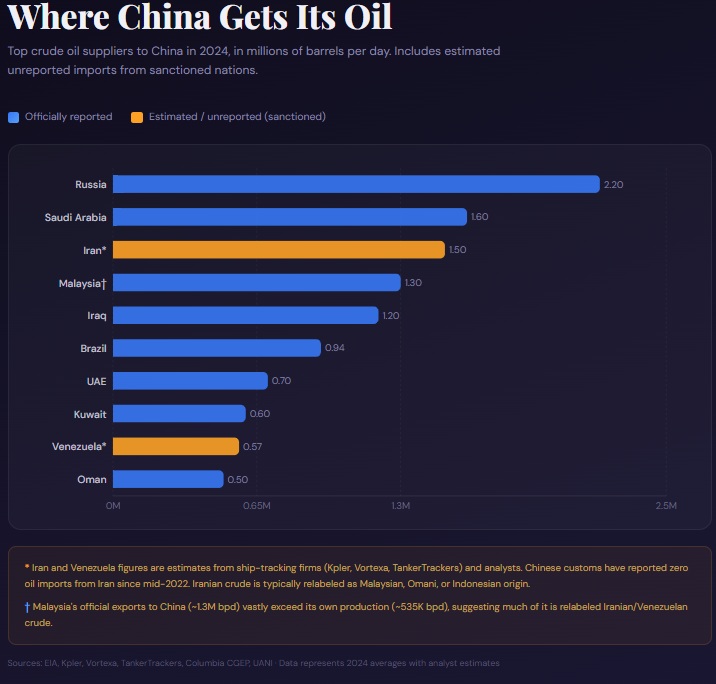
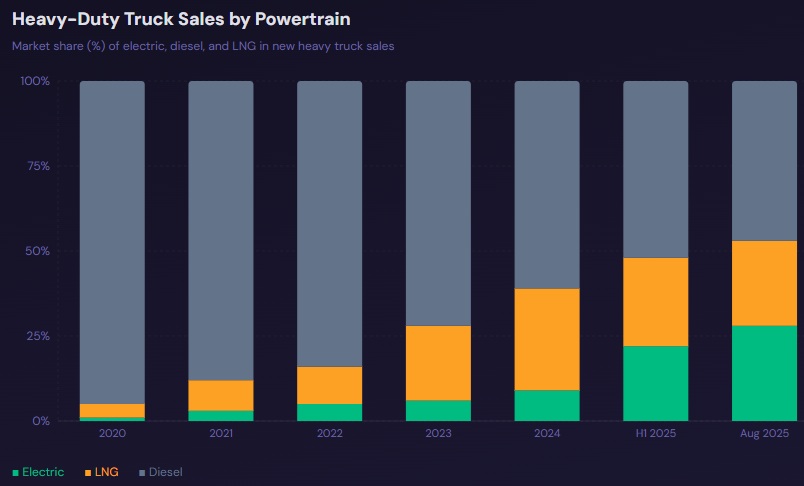
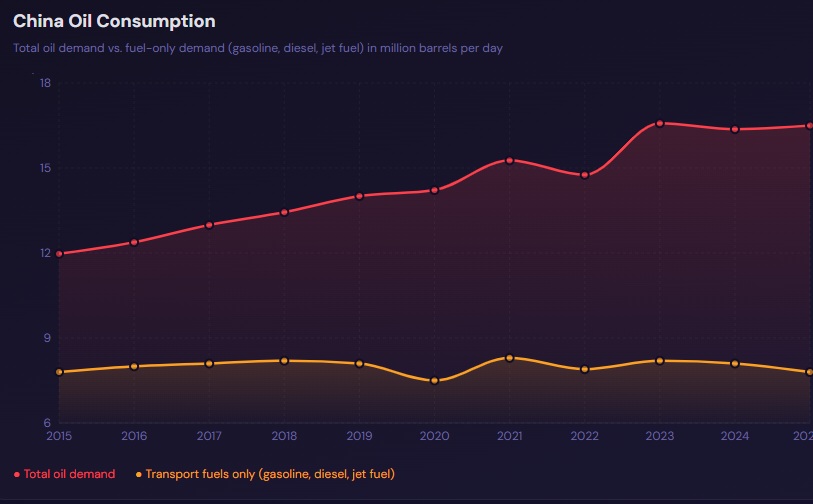
China is fond of dictatorships and generally supports them (an unfortunate fetish in our estimation). It has been an ally of Iran, for instance, but it can’t do anything about the current U.S.-Israel military action against Iran. Officially China does not import any oil from Iran–China does not want its companies sanctioned by the U.S. According to Chinese customs data, China hasn’t imported a single drop of oil from Iran since mid-2022. In reality, the picture is starkly different. China is now nearly the sole buyer of exported Iranian oil, purchasing upward of 90 percent of Iran’s crude exports, totaling an estimated $46.7 billion in 2024. The trade relies on an elaborate shadow logistics network. Bloomberg has a good article about how this works. Even as China imports lots of oil from Iran—its third largest source, accounting for about 10 percent of the total—China continues to make large strides in electrifying its economy. We’ve documented in this space the huge increase in sales of electric vehicles. In addition, electric trucks now make up more than a quarter of heavy-duty truck sales. As a result of all of these electric vehicles, transport fuel consumption is decreasing. Total oil demand is flat in China. The current military imbroglio is a challenge for China, but not nearly what it would have been a few years ago.