One Tiny Flower, Jeff Tweedy sang, his two sons and their friends backing him in a band as tight as a scuba suit. The song eventually crescendoed into a maze and matrix of musical perfection. Tweedy is the head guy of Wilco and before that was in Uncle Tupelo. Look them up if you need to. But this was a different band. Late in the show, Tweedy explained that he knew all the band members since they were little kids—his two sons even longer, of course. They all live within a three-block radius of each other. Community is cool. We were there thanks to our friends, Pete and Mike, our own little community that has seen Tweedy and Wilco for 30 years in many incarnations, but none more endearing than this one.The next night we saw Bruce Springsteen in Portland, thanks to the great Brian, Cap’n of all things friendship. It was essentially a protest concert. Bruce and the E Street Band were taking no prisoners. The concert started with Bruce alone on the stage, calling on the crowd to choose democracy over authoritarianism, the rule of law over lawlessness and ethics over unbridled corruption, among many other good choices. He and the E Street Band belted out one angry anthem after another.
But slowly, almost without noticing, the songs became a bit more hopeful. And then uplifting and then inspiring. As he introduced My City of Ruins, which he performed in New Orleans at Jazz Fest, a few months after Katrina, bringing that crowd to tears, he recited for the Portland crowd a litany of accurate accusations of Trump misdeeds and atrocities. But in the end, before launching into Dylan’s Chimes of Freedom, he said, “The hardest part about all of this for me has been feeling the distance between your fellow citizens, your neighbors–and that distance can darken your soul.” He reminded the crowd that the country was founded on disagreement “while recognizing our common humanity.” Frankly, we needed the reminder. People who support Trump have families too. They listen to music. They play it. In fact, as we type, we think of another family we know, with far different political views than ours, who play music together: One tiny flower. And we plant a flag in Strait of Hormuz data, sing Hungary like the Wolf, and take a dose of Chinese Medicine. It’s this week’s International Need to Know, born to run down crucial international information, trying not to be misunderstood about global data.
Without further ado, here’s what you need to know.
Hungary Like The Wolf
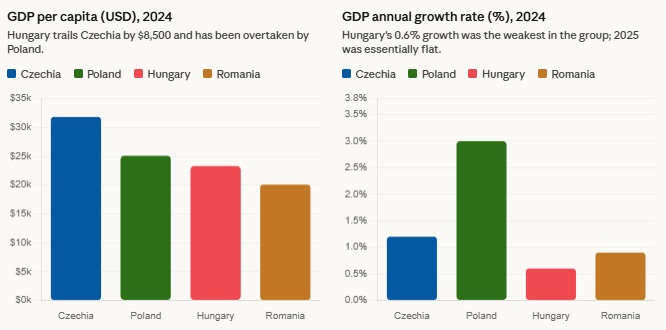
Hungary’s election takes place this weekend. Vice President JD Vance campaigned this week with Hungary Prime Minister Victor Orban. It was a symphonic tragedy in three movements that describes our new 19th century world and the three large malevolent actors* operating in it.
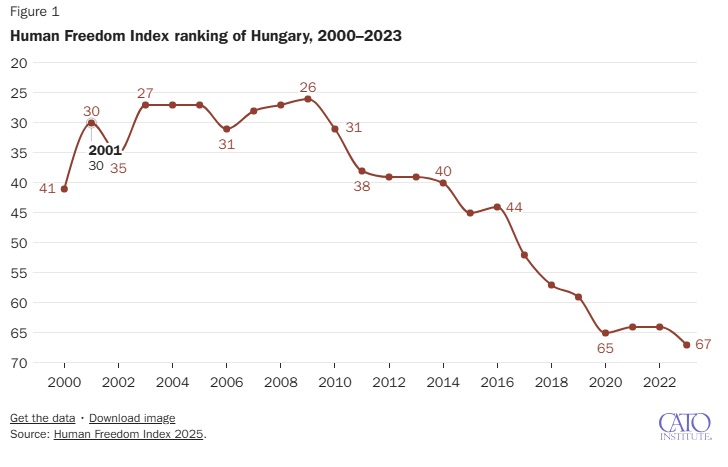
Hungary’s damaged democracy
As a reminder, the New Media Council created under the control of Orban’s political party, Fidesz, more than ten years ago damaged press freedom In fact, Hungary fell 45 places in the Reporters Without Borders Press Freedom Index. The Hungarian constitution was amended to explicitly limit the Constitutional Court’s power to challenge new laws — directly nullifying several adverse rulings against Fidesz legislation. In a landmark speech, Orbán declared: “The new state that we are building is an illiberal state, a non-liberal state.” He cited Russia, Turkey, and China as successful models. I could go on and on.
Orban’s Love of Putin and Russia
In a 2025 phone call with Putin, Orban tells Putin, “But yesterday our friendship rose to such a high level that I can help in any way — there is a story in our Hungarian picture books where a mouse helps a lion.” He also says to Putin according to the transcript. “I am ready to help immediately … In any matter where I can be of assistance, I am at your service.” Hungary has consistently opposed military aid to Ukraine while maintaining close ties with Moscow. Orban is anti-democracy and pro-Putin…so JD Vance’s kind of guy.
Our Man in Budapest
On Tuesday, five days before the election, U.S. Vice President JD Vance stood next to Orban at a press conference and said, “I want to help as much as I possibly can, the prime minister, as he faces this election season…. I’m here to help him in this campaign cycle.”
Vance, contra Springsteen, chooses authoritarianism over democracy.
*China, Russia, and, sigh, the United States of America
Tracking the Strait of Hormuz
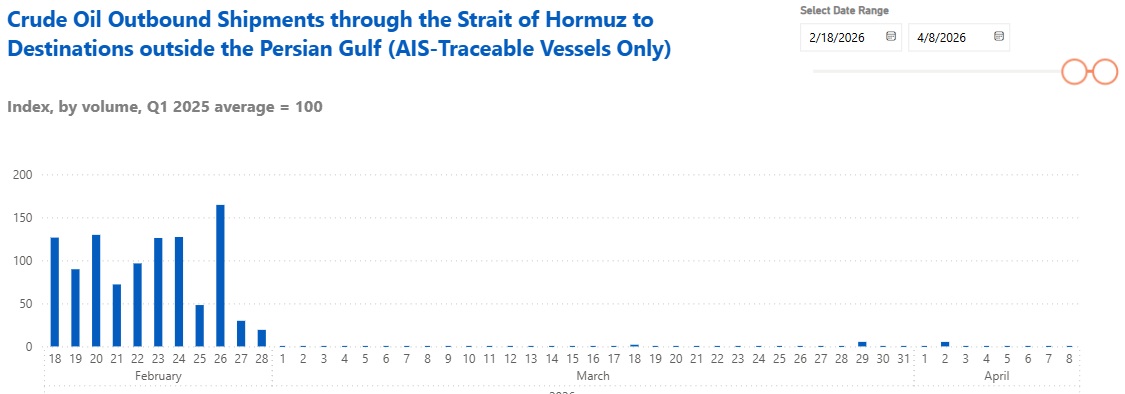
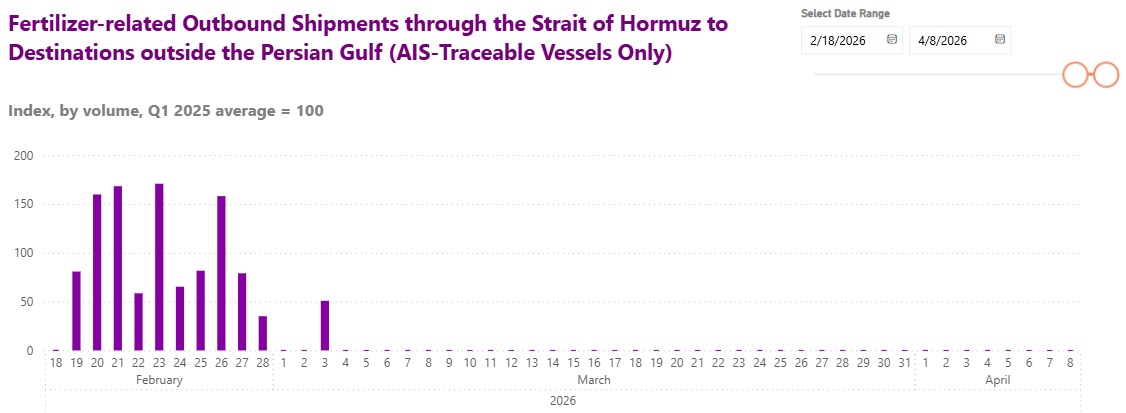
Since we live in an age of unreliable narrators, too many Humbert Humberts and Holden Caulfields in charge to count, our preference is to use hard cold data to guide us. So, we were delighted to find the World Trade Organization’s (WTO) Strait of Hormuz Trade Tracker. Yes, that WTO, the organization which held meetings in Seattle in 1999 that turned into a riot. WTO teamed up with AXSMarine (Signal Group), an organization specializing in maritime data, to track what is actually traversing the Strait of Hormuz. They use real-time tracking data of vessels, including seaborne dry bulk, tanker/gas, and liner cargoes. If you look at their graphs below, which run through April 8, you’ll see oil tanker traffic fell off a cliff at the beginning of the war. Similarly LNG outbound shipments cratered. So too fertilizer-related outbound shipments. As of yet, normal traffic has not resumed post “ceasefire.” We will likely hear many words from leaders in the coming days and weeks, much of it as accurate as Humbert Humbert saying “She seduced me.” Bookmark the WTO’s Strait of Hormuz Trade Tracker and monitor the data yourself. In fact, for most aspects of this war, including what targets have been hit, try to find data and ignore the words.
Ceasefire Addendum: It is anyone’s guess how long the ceasefire will last. Via Marginal Revolution we read Taufiq Rahim’s assessment, which is able to recognize that many uncomfortable things can all be true at the same time. But what was most remarkable is the ceasefire announcement may not have been the most important news of the day, as important as it was. Rather, Anthropic’s Mythos breakthrough might be.
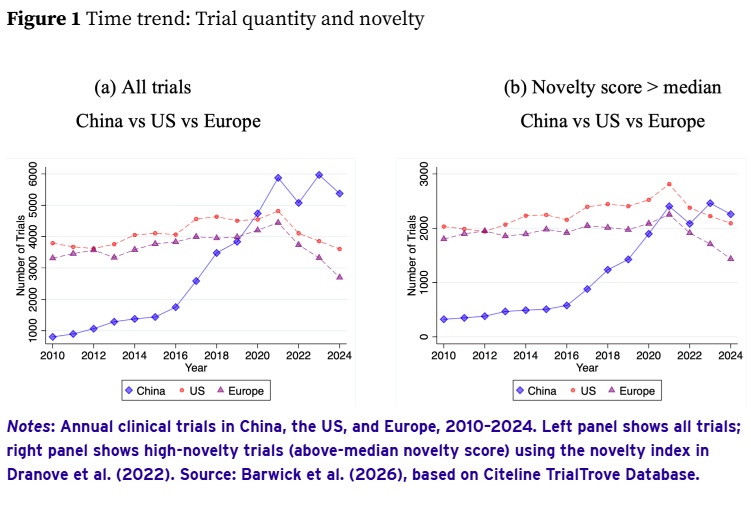
China Corner: Chinese Medicine
Spring sprung earlier this week with sunny and warm weather in Seattle. And so our allergies sprung too. We wish there was better allergy medicine to take, or something to cure allergies. If such remedies are developed in the future, a likely source will be China. A new paper from the Centre for Economic Policy Research (CEPR) finds that in 2010, China accounted for fewer than 8 percent of global clinical trials. By 2020, it had surpassed both the US and Europe in annual registered trial volume. By 2024, China was initiating more than 5,000 clinical trials a year — a more than five-fold increase from its 2010 baseline. And this isn’t low-quality copycat research: China’s high-novelty trials grew by 49 percent to 123 percent relative to the US benchmark over the same period. So how did it happen? The CEPR paper postulates a few theories: scientific knowledge accumulation, talent flows, industrial policy. But ultimately the CEPR paper believes China’s success is due to the 2016 National Reimbursement Drug List (NRDL) reform. Before this law, innovative high-priced therapies were largely excluded from China’s insurance system, meaning that despite China’s enormous population, the effective market for innovative drugs was severely constrained. The government then leveraged its monopsony power to negotiate steep price cuts averaging 50–60 percent in exchange for guaranteed coverage and near-universal patient access. Drug volumes sold increased by 350 percent on average following inclusion. For cancer drugs, volumes nearly increased tenfold. The NRDL reform alone accounts for 43 percent of the growth in oncology trial activity. We’re curious what other studies will show for the reason for China’s success. Either way, we hope there’s soon a Chinese clinical trial on allergy relief.