Inevitably the seasons change. Summer strides out, shivering a bit in shorts and a T-shirt as autumn walks in, casting its shadows and drizzling us with a bit of foreboding Seattle precipitation. The changing of the guard is always a good time to take stock, and so we do. Things we are irrationally proud of: never having played Wordle; never seeing The Nutcracker; somehow surviving 50 seasons of Seattle Mariners baseball. Things we regret: not attending the Stop Making Sense tour because of a calculus final; not traveling to Berlin the night the wall fell; not cutting off the NFL even though a new study finds that at least 25 percent of former players have CTE. On this latter, if we ever become high and mighty over any of your moral failings, feel free to point out this one of ours. In our defense, we very rarely watch a football game nowadays. We are in an eliminator league that we came close to winning last year but our strategy was based on pure odds rather than any deep knowledge of the game. Sure, we watched the Super Bowl like any patriotic Seattleite but our excitement was not anywhere close to what it was for the Seattle Mariners last season (which might be the last time in our lifetime they make the playoffs). Still, our ability to dissociate how bad the game is for the people playing it from our continued engagement with it is remarkable. We once were fond of saying the two most powerful forces in the universe are inertia and the desire to rewrite someone else’s writing. However, if we have learned anything from developments in the last decade in America, it is that disassociation from what we don’t want to know is perhaps the most powerful human force. We most definitely associate ourselves with wanting to know what aging demographics mean for culture, how distributed solar is impacting Africa and the latest on robots and sports in China. It’s this week’s International Need to Know, throwing tight spirals of international information, tackling the most challenging global data.
For the next few weeks we’ll be busy making the world safe for supply chains, music, good food and more. International Need to Know will return on September 24.
Without further ado, here’s what you need to know.
Aging Populations and Culture
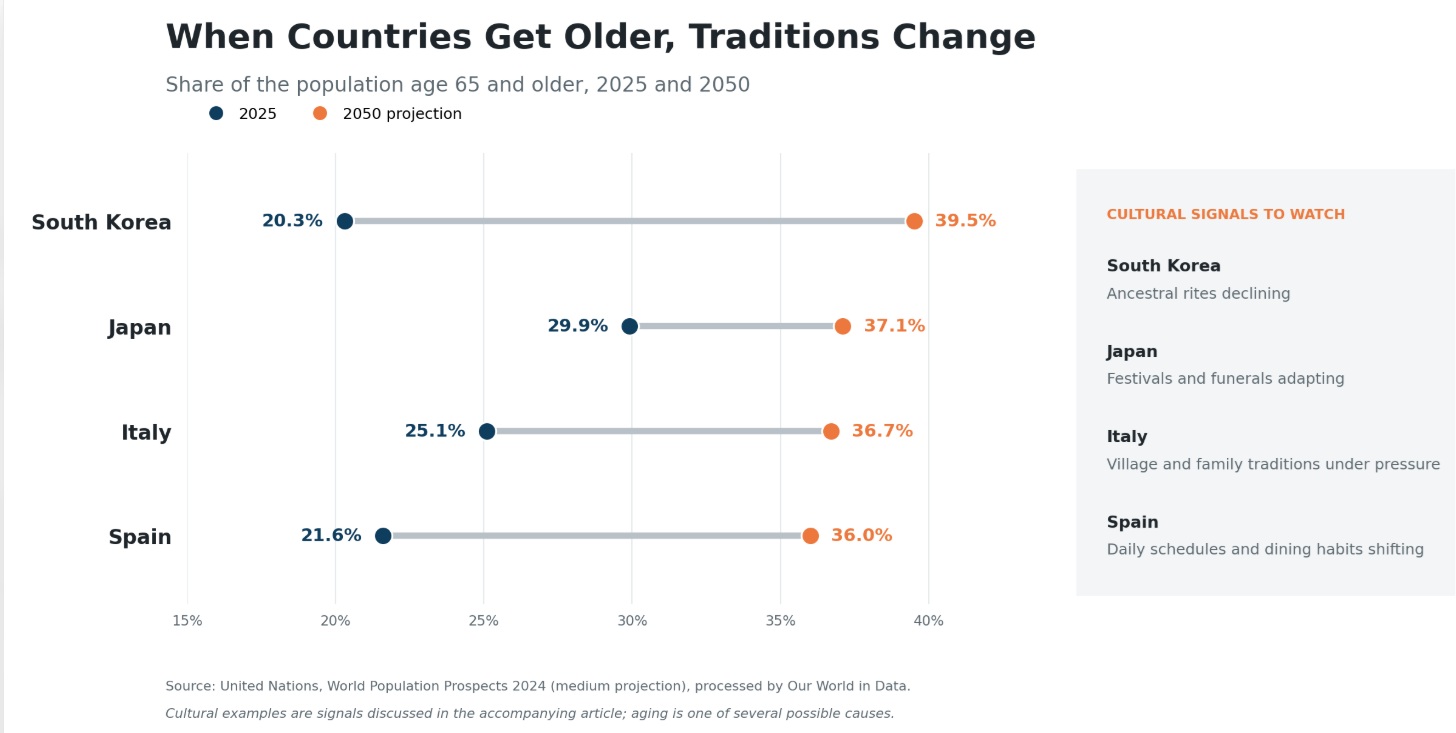
Earlier this week we read a New York Times story about the traditional 10 p.m. dinner in Spain falling by the wayside. Spaniards are starting to eat earlier. The Times article attributes this to changes brought on by the pandemic and health concerns, but we wondered whether an aging population played at least a small role. Regardless, it got us thinking about how aging populations will change cultural habits. The world is rapidly getting older and we wonder what the practical effects will be. Japan offers a glimpse of what may be coming. In 2024, a 1,000-year-old “naked festival” ended even though it still attracted thousands of visitors.* The problem was that only about 10 local households, most of them elderly, remained to do the difficult work of organizing it. Other Japanese festivals have survived by becoming shorter, recruiting outsiders or allowing women to perform roles traditionally reserved for men. In South Korea, only 40 percent of people surveyed in 2025 planned to prepare the traditional Chuseok table honoring their ancestors, down from 74 percent in 2016. In Europe, village festivals and religious processions might be consolidated, Sunday family meals become smaller and local dialects and recipes become niche preserved heritage. Traditions will not necessarily disappear but they will change. But predicting the future is hard, so who knows how this all plays out.
Most Solar in Africa is Distributed
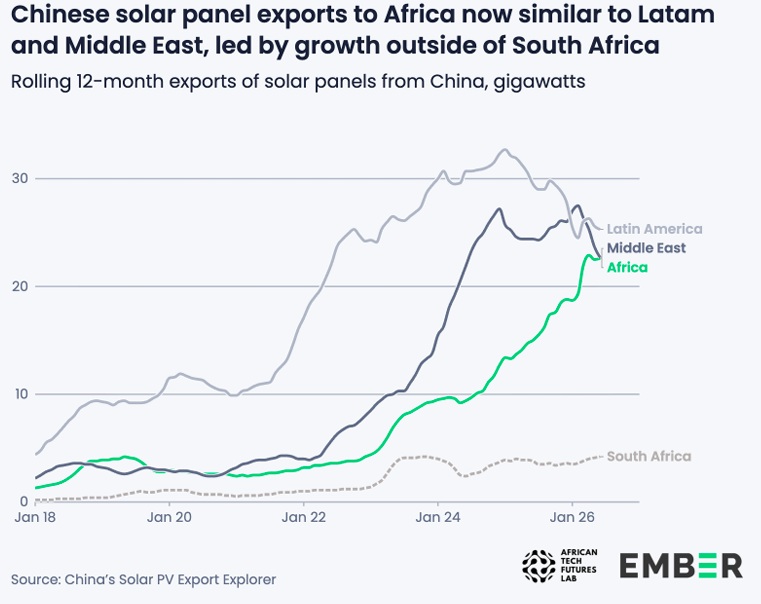
We’ve written about solar taking off in Africa, but that was using official data which mostly only captures large solar installations. Ember has a new report out that captures distributed solar—solar panels installed on homes and individual businesses. It turns out that three-quarters of the 26 GW of solar added in Africa between 2023 – 2025 is distributed. Ember estimates that this year a record 17GW of solar will be installed in Africa. When you look at official statistics from sources such as the International Energy Agency, distributed is not usually included. Ember, using a new methodology, is able to capture the growth in distributed solar. The rapid adoption of distributed solar is happening throughout Africa. According to Ember, “19 countries have seen year-on-year growth of over 100%, including 544% in the Democratic Republic of the Congo (DRC), 282% in Zimbabwe, 176% in Egypt and 117% in Zambia.” Solar, paired with advances in batteries, will likely transform Africa as more of its population gets access to reliable, abundant electricity.
China Corner: Everybody Wasn’t Kung Fu Fighting
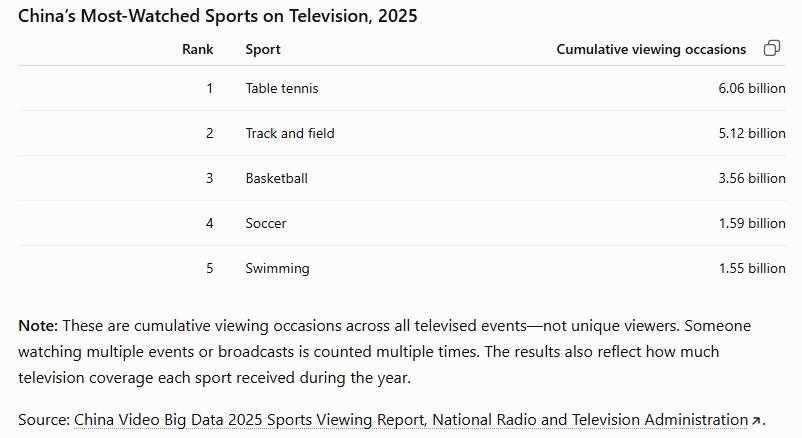
As with many new technologies nowadays, China has become far and away the leader in manufacturing humanoid robots. You have undoubtedly seen videos of them, including their kung fu moves (in case not, video below). They are fun to watch. Industrial robots are automating lots of activities. But are humanoid robots useful? Have China’s national, provincial and local governments wisely subsidized this industry? Kung fu robots and their utility got us wondering about other sports in China. We know basketball is popular in China but is it the most popular sport there? As with everything in modern life, it depends on how you measure it. According to Ampere Analysis, 53 percent of Chinese like basketball and 22 percent call it their favorite sport. Indeed, Chinese government data shows 3.56 billion cumulative viewings of basketball in 2025. Football (soccer) is popular too with 1.59 cumulative viewings. Track and field has lots of viewings because of multiple events on TV. Pretty good. However, table tennis, the sport many associate China with, had 6.06 billion viewers. It accounted for 42 of China’s 50 highest-rated sports telecasts in 2025. Of course, robots now play table tennis. This video racked up 120 million views. Maybe that will be their use case? Or not.