You may remember the ice cream and baseball extravaganza we organized this summer. Last weekend, as part of a quarterly extravaganza effort, in honor of autumn, the International Need to Know Spouse and I went on a Fall Bounty Tour Extravaganza. We headed north to the town of Snohomish and its environs, including a farm with extraordinarily tasty apple cider donuts and a corn maze. We then walked the charming streets of downtown Snohomish, a hamlet we had not been to in decades. We wandered into galleries and numerous antique shops and had slices of pie at Snohomish Pie Company. Later we had a flight of ciders at a nearby farm. As we drove around from place to place we were struck that such rural and bountiful places are so near the city. We admit that we mostly obeyed speed limit signs out there, perhaps reflexively thinking of stereotypes of country speed traps. In Seattle, the law, whether speed limits or elsewise, often seems more like light guidance, or perhaps for some, a background nuisance.
Indeed, when we returned to the city, the next day we were driving on an arterial and heard sirens in the distance behind us. We saw a police car speeding towards us two blocks away. Like the upstanding citizen that we are, we pulled over to let him pass, which he did, and then immediately turned off his lights and siren, which we found a bit odd, and even slightly annoying. We followed him for a block or two and then he went into the parking lot of a restaurant. Part of us respected this power move and another part wanted to make a citizen’s arrest. Ahh, to get back to the simple ways of the countryside of the day before…and we take you to the complicated ways AI helps and frightens humans, the worrisome Ethiopia-Eritrea conflict (and how it relates to Iran), and which countries are most affected by China Shock 2. It’s this week’s International Need to Know, providing delightful countryside muffins of international information, farming the most nutritious global data this bountiful world provides.
Without further ado, here’s what you need to know.
Math Helps Machines Help Humans
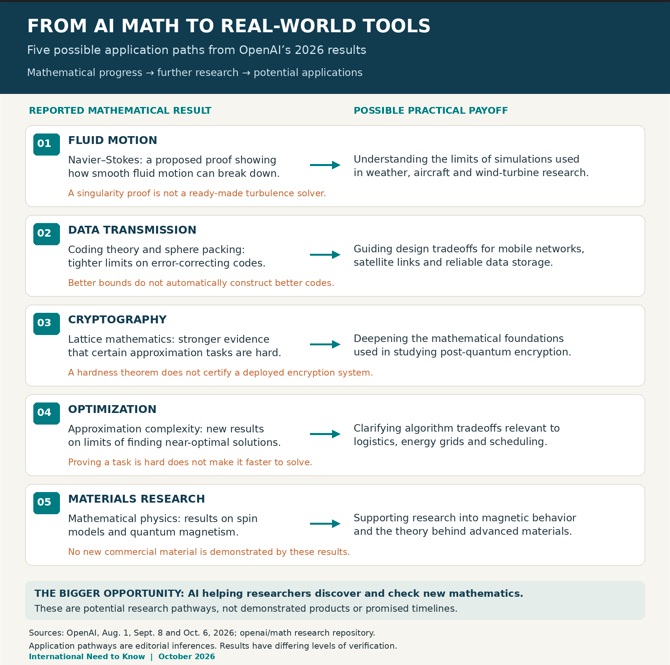
We have empathy for the mathematician Hugo Duminil-Copin last week who was driven to tears by OpenAI solving the area of math he had been working on, the field his life was dedicated to. He said mournfully, “They have annihilated my field of research.” Long ago we were a math major but never close to the level of this guy and certainly not AI-caliber. But while we sympathize with people whose plans are being upended by technology (it’s interesting that today’s upheavals are targeting intellectual activities rather than as in the past blue collar physical ones–how if at all will political responses be different to this equation?), we also marvel at what changes these math accomplishments might bring. Because there are practical applications to these math breakthroughs. Their potential could bring new products into communications, cybersecurity, engineering and materials research. Below is a graphic showing some of these possible applications—this was generated by ChatGPT, of course. Real life human friction will undoubtedly mean results will come slower than we might like. Infrastructure, regulations and policy will slow everything down. But the next years and decades, if we don’t destroy ourselves, will bring all sorts of helpful wonders, making life even less nasty, brutish and short just as earlier industrial revolutions did.
Uh Oh, Ethiopia and Eritrea Edition
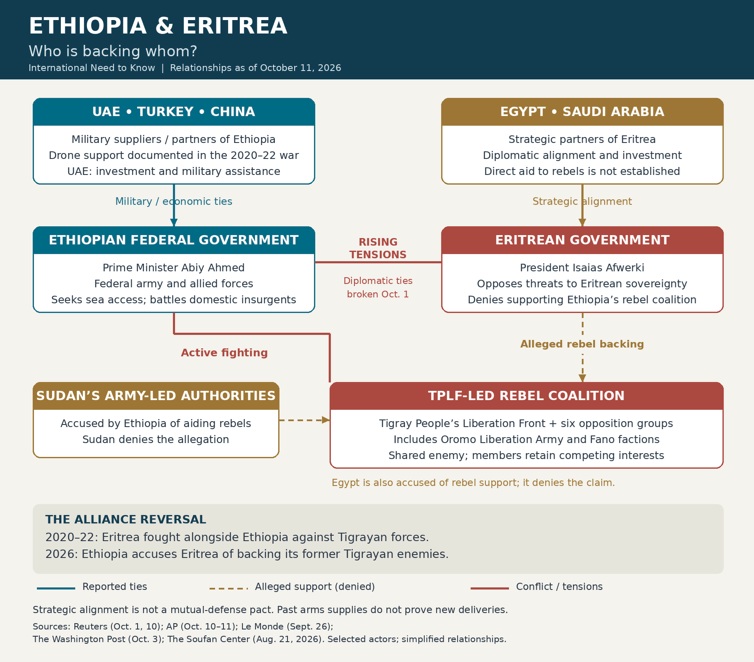
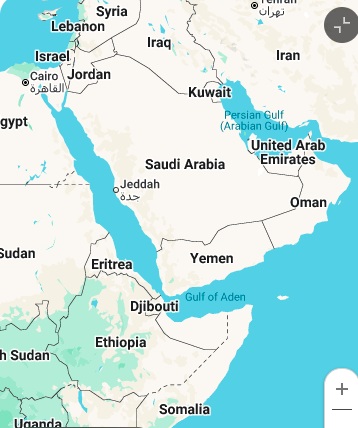
The Iran war and associated Houthi attacks suck up eyeballs and attention but there are other conflicts in the world, including ones the Iran War is having an influence on. We’re looking at you Ethiopia and Eritrea. Fighting resumed between Ethiopia’s federal government and a Tigray People’s Liberation Front (TPLF)–led rebel coalition, with Eritrea apparently now involved. During the 2020-2022 war, Eritrea helped Ethiopia fight Tigrayan forces. Ethiopia now accuses Eritrea of supporting the TPLF. Eritrea denies this. Diplomatic relations broke down October 1, and both countries have appealed to the UN amid allegations of Eritrean incursions. What does this have to do with what’s going in Iran, and Houthi and the blowhards? Eritrea has become more strategically valuable. Its coastline faces Yemen near the southern entrance to the Red Sea. Conflict involving Iran and the Iran-backed Houthis increases foreign powers’ interest in Eritrea’s ports and cooperation. Ethiopia is badly affected by the lack of oil flowing through the Hormuz Strait and Red Sea Ports. It very much would like access to the Red Sea. Ethiopia’s economy grew rapidly in the 2010s. Its economy is still growing, though at not as high a rate, but the government has grown increasingly authoritarian. Eritrea, of course, is desperately authoritarian with a horrible human rights record. Countries throughout the region are aligned in different ways in this conflict. Below is a handy graphic to try to make sense of it. Our new Trump-induced era of might makes right is unlikely to help in all of this. Sigh.
China Corner: China Shocks Europe & Japan
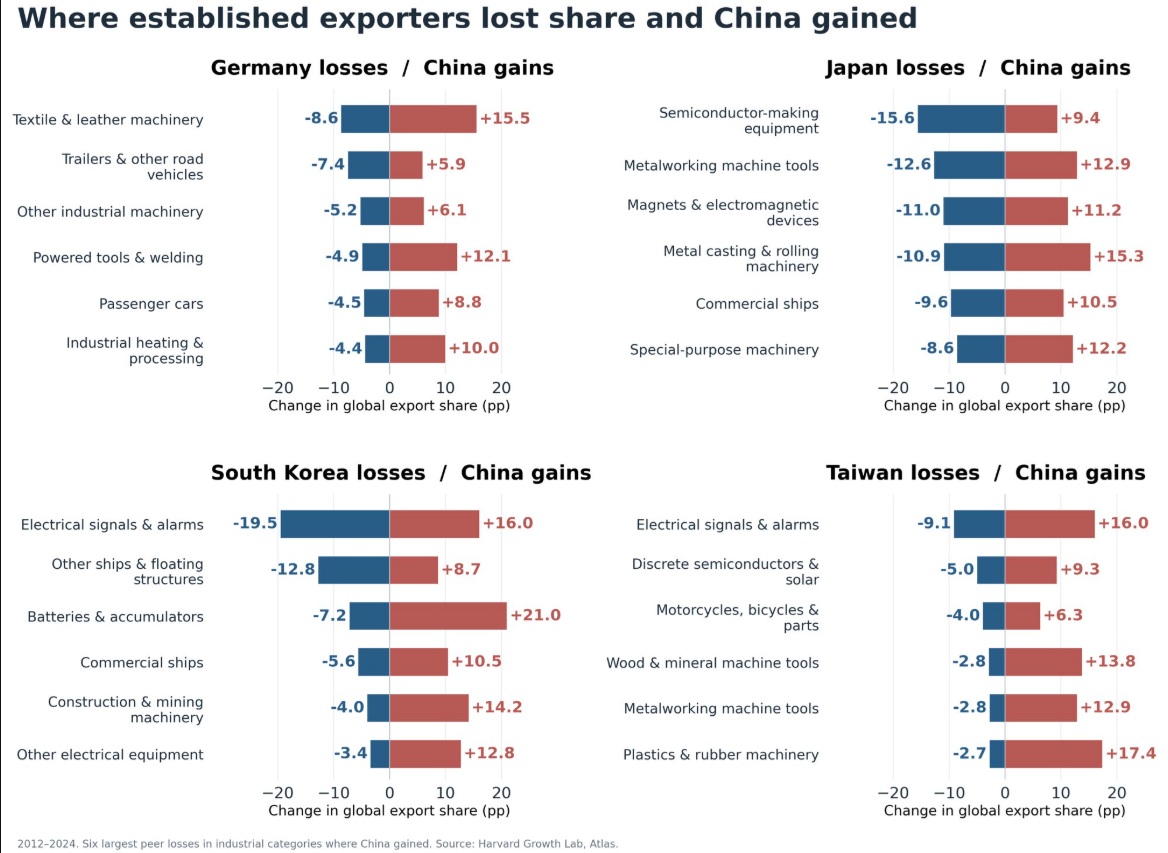
A lot has been written about the so-called first China shock, which is asserted to have taken place after China joined the WTO in 2001. A famous study by economists David Autor, David Dorn and Gordon Hanson stated that the rapid increase of Chinese manufacturing and Chinese exports to the United States displaced between 500,000 and 2 million jobs. Less often covered is that lower prices led to more jobs overall gained than lost. But nonetheless, some location-specific places were definitely harmed. Now folks are talking about the second China shock. As we’ve covered here, China continues to increase its manufacturing share and is exporting even more (even as imports lag behind). But this time the China shock is hitting other countries, not the United States. As you can see in the charts below from Kyle Chan of the Brookings Institution, China’s latest export increases come at the expense of Germany, Japan, South Korea and Taiwan. For example, China increased its machine tools prowess. At the same time, Japan’s exports of those machines have fallen nearly 13 percent. China has increased its auto exports by 8.8 percent while Germany’s fell 4.5 percent. How will countries respond to this shock? Perhaps it will be shock therapy for policy considerations.